Priscilla Sitienei — her life, her impact, and what made her story so remarkable
 B R Hlambela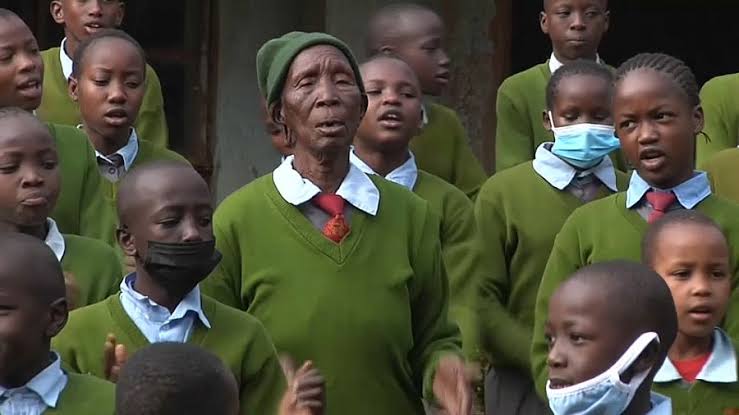
Priscilla Sitienei was born around 1923 in rural Kenya.
Exact records are unclear, as was common in her time and region.
During her youth, colonial-era Kenyan society generally gave limited educational opportunities, especially for girls.
Sitienei did not attend formal school when she was a child.
She grew up in what is now the Rift Valley region, in the village of Ndalat in Nandi County.
Sitienei served her community as a traditional midwife for many decades — around 65 years.
In that role she delivered many children, including some who would later become her classmates.
She returned to school around 2010 (she would have been in her late 80s), she decided to enroll in primary school, at Leaders Vision Preparatory School.
Her motivation: to set an example, especially to children who had dropped out, including young mothers.
She was affectionately known as “Gogo,” which means grandmother in her native Kalenjin language.
Although she started at the lowest levels, her enthusiasm was strong.
She studied basic subjects (math, reading, etc.) and even things like physical education. She participated along with children many decades younger than her.
Sitienei’s going back to school later in life challenged many assumptions: that school is only for the young, that once you miss education it’s too late, or that elders can’t be learners.
She showed learning can happen at any age.
Her presence in class had real ripple effects: she encouraged children to stay in school, especially girls; she inspired mothers and older people who had missed out on schooling; she emphasized that education is not just academic, but also a mark of dignity and self-empowerment.
Her life story became internationally known.
There was a film made inspired by her life — Gogo (or Gogo Priscilla) — and she travelled abroad to France for its premiere, among other recognitions.
Sitienei continued attending school into her nineties.
In 2022, at about age 99, she was still in class.
She passed away peacefully in November 2022 at her home.
Her grandson reported she had developed health complications after attending school.
Kenyan media and international outlets noted her death, celebrating the example she had set.
Sitienei embodied the idea that learning isn’t just for certain ages — one can aspire to learn at any stage of life.
By going to school, Sitienei urged others—especially girls or older people who missed schooling—to believe they too could pursue education.
Courage to start late: Despite missing educational opportunities in her youth, she took up formal education very late, showing it’s never too late.
her journey had broader social value — inspiring conversations in Kenya and globally about access to education, adult literacy, the value of service, and dignity.
About the Author


 Viable News Team