Commuters Left Stranded as Santaco Protests Over Taxi Impoundments in Ekurhuleni
 Viable News Team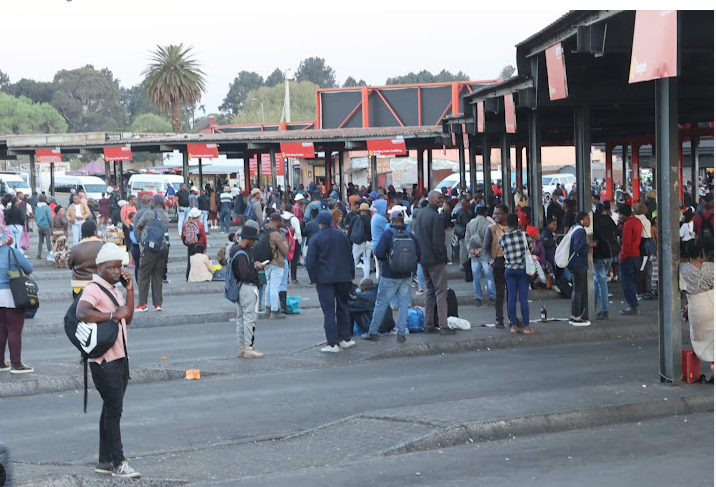
Thousands of commuters in parts of Ekurhuleni, including Katlehong and Germiston, were left stranded on Thursday after the South African National Taxi Council (Santaco) suspended taxi operations in protest against the impoundment of their vehicles. What began as a dispute over operating licences has quickly escalated into a broader standoff between taxi operators and the Gauteng Department of Roads and Transport, leaving ordinary passengers to bear the brunt of the disruption.

A Difficult Decision for Taxi Operators
Santaco Ekurhuleni regional secretary, Zweli Mnisi, said the decision to down tools was not taken lightly. According to him, the suspension of services was necessary to protect operators from what the industry describes as “selective and unfair law enforcement.”
At the heart of the matter are the so-called 10-seater ‘baby buses’, which have become increasingly popular among taxi operators and commuters. These vehicles are being routinely impounded for operating without valid licences. However, Mnisi claims that the problem lies not with the operators but with the authorities, who he says have stopped issuing the required licences altogether.

“This difficult decision stems from the ongoing impoundment of vehicles, particularly the 10-seater baby buses, which are consistently being targeted for not having operating licences. These licences, however, are no longer being issued by the relevant authorities, leaving operators without any legal recourse,” Mnisi explained.
Taxi operators argue that they are effectively trapped in a catch-22: they cannot obtain licences because the system is stalled, yet they face fines of up to R5,000 per vehicle every time their taxis are impounded. For many, these fines are unsustainable and threaten the survival of their businesses.
Government Stands Firm on Law Enforcement
But the Gauteng Department of Roads and Transport is standing firm. Spokesperson Lesiba Mpya defended the impoundments, insisting that the operations are about the restoration of law and order in the taxi industry.
“We are not going to allow illegal operations. Anyone who does not possess a valid operating licence, as per the National Land Transport Act, will not be allowed to operate on Gauteng’s roads,” Mpya said.
He added that inspectors have encountered receipts from operational level agreements (OLAs) dating back to 2023, raising questions about whether operators are deliberately dragging their feet rather than complying with regulations. Mpya stressed that vehicles are impounded only if they are operating illegally or are deemed unroadworthy.
“If your vehicle is compliant, you are not a candidate for our impounding. We do not impound unfairly,” Mpya said, noting that police are tasked with profiling vehicles and documenting evidence to prove why they are being removed from the roads.

Commuters Pay the Price
While the back-and-forth between Santaco and government officials continues, it is commuters who are left caught in the middle. On Thursday morning, taxi ranks in Katlehong and Germiston stood empty, forcing thousands of people to walk long distances or scramble for alternative, often costly, transport.
For many working-class South Africans, taxis remain the backbone of public transport, providing daily access to jobs, schools, and essential services. The sudden suspension of services not only disrupts livelihoods but also underscores just how fragile the country’s transport system is when disputes arise.

A Call for Dialogue
The standoff reflects broader tensions in the taxi industry, which has long grappled with issues of licensing, safety, and regulation. On one side, authorities argue that strict enforcement is essential to improve safety and bring order to an often-chaotic sector. On the other, operators feel cornered by a licensing system that they say fails to provide workable solutions, leaving them vulnerable to fines and financial ruin.
Observers say what is urgently needed is meaningful dialogue between Santaco and the Gauteng transport department to find a solution that addresses both regulatory compliance and the economic realities facing taxi operators. Without compromise, it is commuters who will continue to pay the highest price.
About the Author