South African Women Expose Red Flags in Russian ‘Job’ Scheme: Alabuga Recruitment Under Scrutiny
 Viable News Team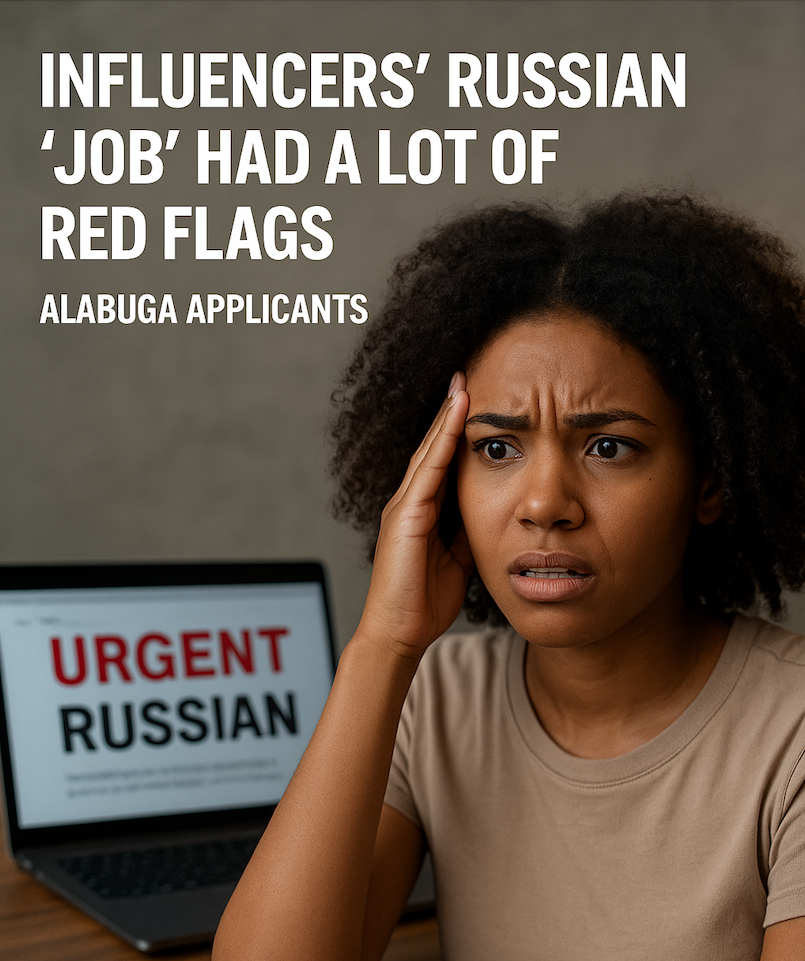
JOHANNESBURG – What began as an enticing promise of overseas work opportunities has quickly unravelled into what experts are calling a textbook example of a potential trafficking scam. Several South African women who applied to the Russian-linked Alabuga Start Programme say the recruitment process was riddled with warning signs, leaving them feeling pressured, misled, and ultimately alarmed.

The programme, heavily promoted online earlier this year, advertised free flights and accommodation along with lucrative jobs in fields ranging from hospitality to logistics and even installation work. For many job seekers facing South Africa’s growing unemployment crisis, the offer seemed like a golden opportunity. Instead, applicants say, it soon revealed itself to be a trap laden with red flags.
“They Wanted You There Now”
Mamello Natasha Koloba, one of the women approached by recruiters, described the relentless communication style that quickly set off alarm bells.
“They do put pressure on you in terms of you having to come that side. They contact you, if you don’t answer their text on WhatsApp they will send you an email,” Koloba explained.
At times, the tone became insistent and urgent. “They put pressure on you, it’s like: ‘I want you here now. Can you come work here now?’” she recalled.

For Koloba and others, the lack of clear information about the actual job roles, working conditions, and legal documentation raised immediate suspicions.
Classic Warning Signs of Exploitation
Recruitment specialists who have examined the case say the applicants were right to be wary. According to labour migration experts, offers of free flights and accommodation coupled with vague job descriptions and relentless pressure to relocate are hallmarks of exploitation schemes.
“This has all the hallmarks of trafficking – urgency, vagueness, and promises that seem too good to be true,” said Dr. Sipho Molefe, a Johannesburg-based human trafficking researcher. “Legitimate employers don’t pressure people across multiple channels to board a plane. They provide contracts, visas, and official guarantees.”
Authorities agree. South Africa’s Justice Ministry has confirmed it is investigating the Alabuga scheme, warning that it may be linked to organised human trafficking operations targeting vulnerable young women.

Influencers Caught in the Middle
Adding another layer to the controversy, several local influencers helped popularise the programme through slick social media posts, drawing in thousands of applicants. Many of these influencers have since backtracked, issuing public apologies and insisting they were unaware of the true nature of the recruitment drive.
“We genuinely thought we were promoting international opportunities for young South Africans,” one influencer wrote in a since-deleted post. “If we knew it was unsafe, we would never have endorsed it.”
But for critics, the damage had already been done. Job seekers, desperate for economic opportunity, had been exposed to what now appears to have been a predatory scheme.

The Bigger Picture: Preying on the Vulnerable
South Africa’s staggering unemployment rate – particularly among women and young people – has created fertile ground for such schemes to flourish. With many people eager to escape poverty and limited job prospects at home, fraudulent recruiters often find a ready pool of hopeful candidates.
“They preyed on vulnerable job seekers,” said human rights activist Lindiwe Dlamini. “When people are desperate, promises of overseas opportunities can override caution. That’s why we need more awareness and government intervention.”

Government Response and Warnings
The Justice Ministry has urged citizens to verify any international employment offers through official government channels before committing. The Department of International Relations and Cooperation (DIRCO) has also reminded South Africans that overseas jobs must include legally binding contracts, work visas, and embassy verification.
“If it feels too good to be true, it probably is,” the Ministry said in a statement. “We are treating this case with urgency because it bears the classic signs of trafficking.”
A Narrow Escape
For the women who turned down the Alabuga offer, the relief is palpable. Many now believe that by refusing to board that plane, they may have saved themselves from a far more dangerous fate abroad.
“Looking back, I am so grateful I trusted my instincts,” said Koloba. “Something told me this wasn’t right, and now I see why.”
A Cautionary Tale
The Alabuga Start Programme has quickly become a cautionary tale for South Africans navigating the often murky waters of international job offers. As investigations continue, experts are calling for stricter regulation of online recruitment and harsher penalties for those who profit from misleading or exploitative schemes.

For now, the warning rings clear: in a world where scams increasingly masquerade as opportunities, vigilance is the first line of defence.
About the Author