Amber Lee-Hughes Awaits Judgment in High-Profile Child Murder Trial
 Viable News Team
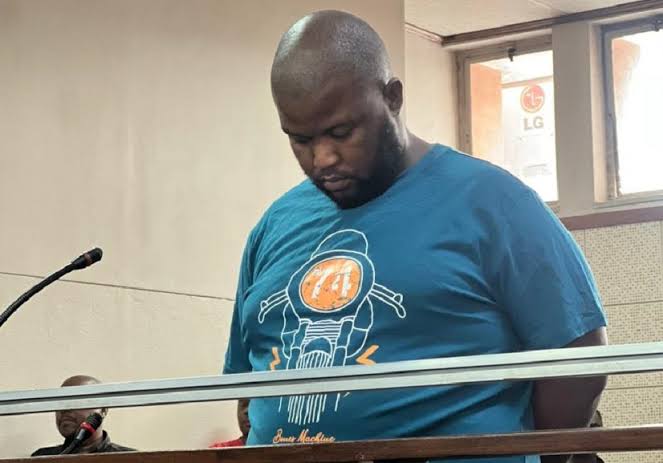
JOHANNESBURG – The eyes of the nation are once again fixed on the High Court in Johannesburg, where judgment is expected today in the harrowing trial of Amber Lee-Hughes, the self-confessed child killer whose case has shaken South Africa.

The 29-year-old former preschool teacher stands accused of raping and murdering four-year-old Nada-Jane Chalita in 2023, a crime that prosecutors allege was motivated by a bitter dispute between Hughes and her ex-boyfriend, the child’s father.
The court is set to deliver its final ruling following emotionally charged closing arguments from both the State and the defence earlier this month.

A Shocking Confession
During the trial, Hughes stunned the courtroom when she admitted to drowning little Nada-Jane. However, she has continued to deny the rape charge, arguing that prosecutors had misrepresented the facts.
Her partial confession has raised as many questions as it has answered, leaving the public deeply divided over her credibility and the true motive behind the crime. For the family of Nada-Jane, Hughes’ admission was a painful reminder of the child’s final moments.

The State’s Case: “A Crime Fueled by Revenge”
The prosecution has painted a chilling picture of a calculated crime driven by vengeance. According to the State, Hughes targeted the four-year-old as a way of inflicting pain on her former partner after their relationship collapsed.
Prosecutors argued that Hughes’ actions were deliberate and cruel, and that her attempts to distance herself from the rape charge were part of a strategy to avoid the most severe consequences. They urged the court to hand down a maximum sentence, describing the case as one of the most disturbing examples of gender-based and child-directed violence in recent years.
“This was not an accident. This was a crime born out of anger, out of a desire to hurt the father by destroying the most precious thing in his life. The court cannot afford to show leniency,” the State argued in its final submissions.

The Defence’s Plea: “A Troubled Mind”
In contrast, Hughes’ legal team has pleaded with the court to consider her state of mind at the time of the killing. The defence suggested that Hughes was mentally unstable and struggling with emotional trauma when the incident occurred, and that she should not be judged with the same severity as a cold-blooded killer.
They acknowledged the gravity of the crime but argued that Hughes’ confession was proof of remorse and should be factored into sentencing.

Public Outrage and Emotional Testimonies
From the moment the case first made headlines, it has provoked public outrage. South Africa has long grappled with high rates of violence against women and children, and the murder of a defenceless child at the hands of someone entrusted with their care has struck a particularly painful chord.
Throughout the trial, the courtroom was often packed with child rights activists, members of the public, and family supporters carrying placards demanding justice for Nada-Jane. Many broke down in tears as graphic details of the crime were read out in testimony.
Civil society groups have since called for tougher sentences in crimes involving children, warning that leniency in this case could send the wrong message.
A Family’s Pain
For the Chalita family, the trial has been a long and agonising journey. Nada-Jane’s mother described her daughter as a bright, loving child with “an infectious laugh and a heart too pure for this world.”
In a victim impact statement, the family pleaded with the court to deliver the harshest possible sentence, arguing that Hughes had robbed them of their daughter in the cruellest way imaginable.
Judgment Day
As the court prepares to deliver its judgment, speculation is rife over whether Hughes will be convicted of all charges – including the rape she has denied – or whether the court will distinguish between her confession and the prosecution’s broader claims.
Legal analysts say the ruling could set an important precedent for how confessions are weighed in serious child-murder cases, especially when there are disputed elements of the charges.
Regardless of the outcome, the trial has once again highlighted South Africa’s ongoing crisis of violence against women and children, and the urgent need for justice systems, social support, and prevention mechanisms to protect the most vulnerable.

For now, all eyes remain on the Johannesburg High Court, where Amber Lee-Hughes will finally learn her fate – and where the family of Nada-Jane Chalita hopes to find a measure of justice for their devastating loss.
About the Author