“Five Men Executed at Illegal Mine – Communities Demand Crackdown on Syndicate Leaders”
 Viable News Team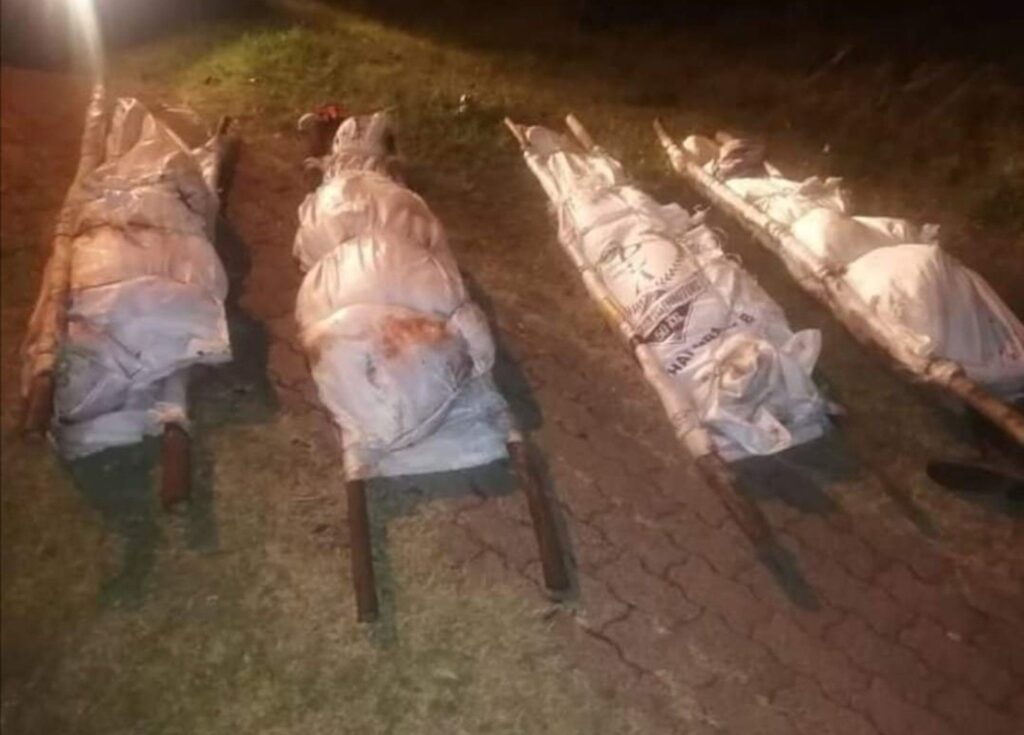
NORTH WEST – Police have launched an urgent investigation after the bodies of five men were discovered riddled with bullets at an open-cast mine in Tlhatlaganyane village, near Sun City. The shocking killings have again cast a spotlight on the volatile world of illegal mining and the power networks that fuel it.

Provincial police spokesperson, Brigadier Sabata Mokgwabone, confirmed that a multi-disciplinary task team has been deployed to piece together what happened at the remote mine. The team will examine the identities of the deceased, the circumstances leading to their presence at the site, and the broader context of rival mining operations in the region.
“All clues and leads will be investigated,” Mokgwabone said, stressing that while illegal mining in the area is common, it would be premature to link the killings directly to ongoing turf wars between rival groups.
A Region Long Plagued by Zama-Zamas
The Tlhatlaganyane village mine, where the men were killed, lies within a region notorious for zama-zama activity the colloquial term for artisanal and illegal miners. The area has previously drawn the attention of three parliamentary portfolio committees on police, home affairs, and minerals, following repeated complaints from the local tribal authority about rampant lawlessness.
Despite high-profile visits and billions of rands spent on operations such as Vala Umgodi, meant to dismantle illegal mining syndicates, criminal networks continue to thrive, often leaving communities living in fear.

Macua: Don’t Just Target Foot Soldiers
The Mining Affected Communities United in Action (Macua), a national advocacy organisation representing mining-impacted communities, has condemned the killings but insists that simply arresting the shooters is not enough.
Macua’s national coordinator, Sabelo Mnguni, described the murders as yet another symptom of a deeper structural failure.
“While the police must urgently pursue those responsible, experience shows that targeting foot soldiers alone is ineffective,” Mnguni said. “The real test is whether law enforcement and Parliament will finally go after the high-level kingpins who finance and direct these operations, and who continue to enjoy political protection.”
Mnguni noted that despite years of police crackdowns, no major syndicate leader has been arrested. Instead, operations frequently net low-level miners, leaving the criminal infrastructure untouched.

Policy Gaps and Political Protection
Mnguni went further, linking the violence to a policy vacuum that leaves mining communities caught between exploitation and neglect.
He criticised recent amendments to the Mineral and Petroleum Resources Development Act (MPRDA), saying they entrench the power of corporate mining giants many of whom donate to political parties — while excluding small-scale and artisanal miners.
“Without meaningful legal pathways for community custodianship and beneficiation, desperation in areas with unemployment rates as high as 70 percent will only deepen,” Mnguni warned. “This provides fertile ground for syndicates to recruit vulnerable young people.”

Calls for Deeper Accountability
Macua has called on Parliament’s portfolio committees and the Madlanga Commission which is investigating state capture in the minerals sector to broaden their probes beyond corporate capture of mineral rights.
“If Parliament is serious, it must also investigate the networks that shield criminal leaders,” Mnguni said.
The organisation argues that empowering communities to manage and benefit from local mineral wealth would make them natural custodians, rather than perpetual victims of exploitation and violence.

A Cycle of Blood and Minerals
The Tlhatlaganyane massacre underscores a troubling cycle: illegal mining syndicates thrive in spaces where poverty, unemployment, and weak enforcement intersect. Communities are left terrorised, workers risk their lives underground, and criminal kingpins grow rich while enjoying layers of protection that shield them from accountability.

For the families of the five murdered men, the police investigation may eventually provide answers. But for mining communities across South Africa, the bigger question remains: will the killings finally push the state to go beyond chasing zama-zamas and confront the real architects of the bloodshed?
About the Author