B R Hlambela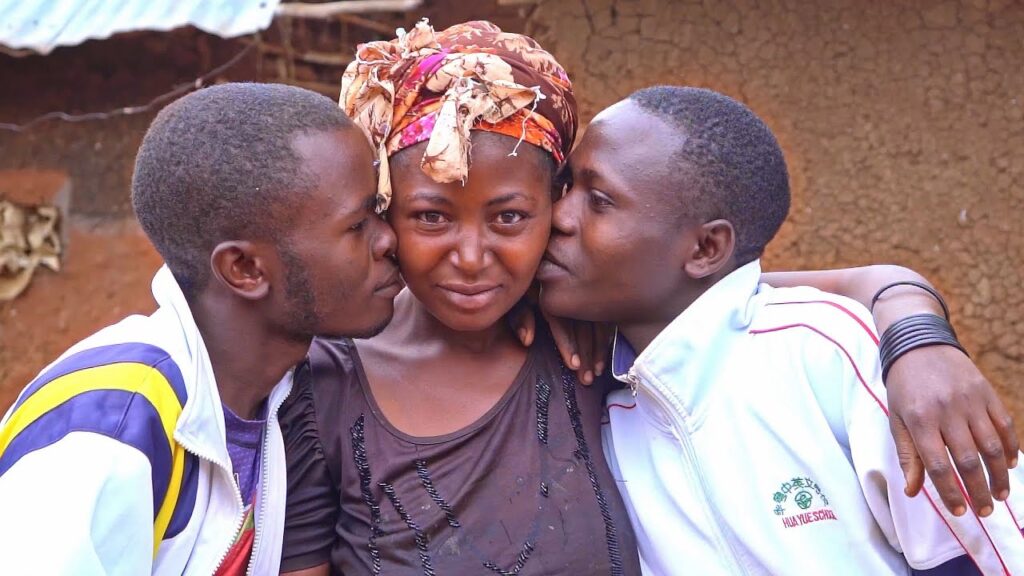
IMAGE CREDIT TO CAMEROON NEWS AGENCY
Francine Jisele, a woman from the Democratic Republic of Congo, who is living in a polyandrous situation — married to two husbands.
Her two husbands, Remi Murula (her first husband) and Albert Jarlace (her second husband), are live in the same house.
The situation came about when Jisele married Remi Murula about six years ago. They had two children.
Murula later left to pursue better opportunities elsewhere and cut off communication with Jisele.
She spent more than three years without hearing from him.
During that period of separation and presumed abandonment, Francine formed a relationship with Albert Jarlace, who became her second husband.
About a year after she started living with Albert, Murula unexpectedly returned.
The three now live together in the same house, sharing many aspects of family life: they eat together, sleep in the same bedroom, on the same bed.
They also share responsibilities: both men contribute by working, bringing in food, etc.
When intimate moments arise, only one husband will stay; the other will leave.
The woman, Jisele, is the one who identifies which man is the father of which child.
Challenges and reflections Jisele expresses discomfort in some parts of the arrangement, especially when both men are present in the bedroom at the same time, feeling it awkward.
She has said she wishes each man could have his own home, so that she could visit them separately—this would reduce the awkwardness and tension.
Remi Murula (first husband) acknowledges fault in the breakdown of communication—that him leaving without contact contributed significantly to what followed.
Cultural and social context Polyandry (one woman with more than one husband) is very rare in Africa, and is not a widely accepted or common practice.
Jisele’s case has drawn attention partly because of how unusual it is in the local context.
The situation raises many questions about social norms, legal status, family identity (especially with children and paternity), and the emotional wellbeing of all parties.
Marriages to more than one spouse may not be formally recognized or may be controversial.
Family dynamics are complex: children may face confusion, and partners may face emotional stress.
There’s also the social stigma and community response: such arrangements may be judged harshly, or seen as breaking cultural or religious norms.
About the Author


 Viable News Team