US Army Uses Autonomous Boats to Escort Military Vessel in Philippine Exercise
 Viable News Team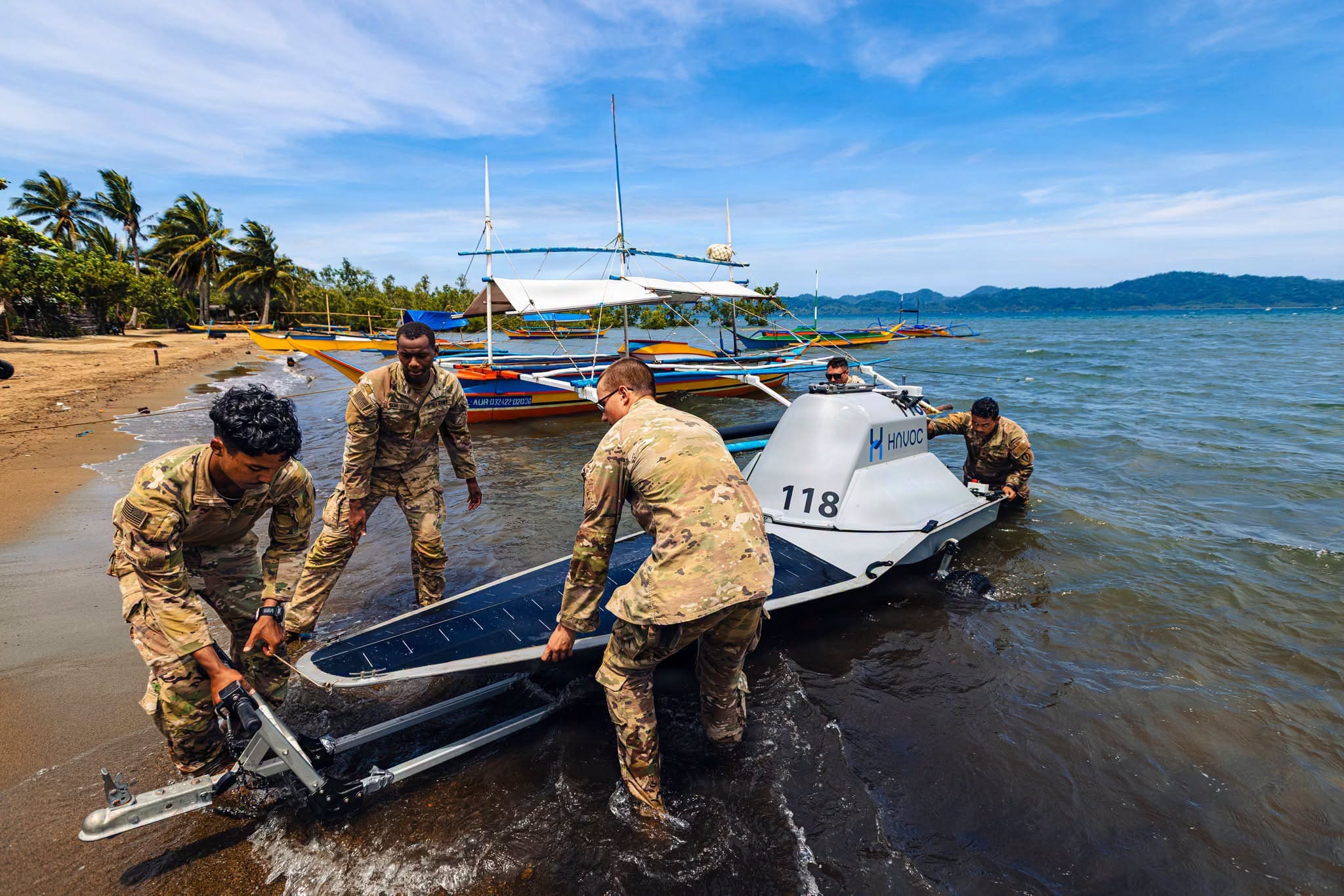
The U.S. Army has demonstrated the growing role of autonomous technology in military operations after deploying unmanned surface vessels (USVs) to escort a logistics ship during a joint exercise with the Philippine Army.
The operation took place in Casiguran Sound Bay in the Philippines as part of Salaknib 2026, a series of military exercises designed to strengthen cooperation between American and Philippine forces. Soldiers from the 125th Intelligence and Electronic Warfare Battalion, part of the 25th Infantry Division, deployed the autonomous boats ahead of a U.S. Army Logistics Support Vessel approaching Port Casiguran.
According to the U.S. Army, the uncrewed vessels operated independently using onboard sensors to monitor the surrounding environment, detect potential threats, and relay real-time information to commanders on land. The mission supported the transportation of Philippine Army personnel and military vehicles, including armored personnel carriers, over a journey of more than 260 miles.
Private Caleb Hannah, who participated in the exercise, said the autonomous vessels were used to provide security during the ship’s approach to port. The boats reportedly escorted the logistics vessel from approximately six miles offshore, helping ensure the safe arrival of personnel and equipment.
Images released by the Army appeared to show soldiers recovering one of the vessels from shallow waters. The craft carried branding from HAVOC, a firm known for developing autonomous maritime systems for military applications.
Military officials and industry representatives say the technology significantly improves situational awareness on the battlefield. By providing continuous surveillance and intelligence data, autonomous systems can help commanders make decisions much faster than traditional methods allow.
The demonstration comes amid broader efforts by the United States military to expand its unmanned capabilities throughout the Indo-Pacific region. Earlier this year, U.S. Navy officials indicated that the fleet of medium-sized unmanned surface vessels is expected to grow substantially over the next decade, alongside thousands of smaller maritime and aerial drones.
The exercise also follows another recent deployment involving autonomous maritime technology. A U.S. Navy-operated unmanned vessel assisted in the rescue of two Army soldiers after a helicopter incident near the coast of Oman, highlighting the increasing operational use of these systems beyond surveillance missions.
As global militaries continue investing in autonomous technologies, exercises like Salaknib 2026 offer a glimpse into how future maritime operations may rely more heavily on uncrewed platforms for reconnaissance, security, logistics support, and rapid decision-making.
About the Author