The Global South’s Rise: China and South Africa Forge a Strategic Path Ahead of the G20 Summit
 Viable News Team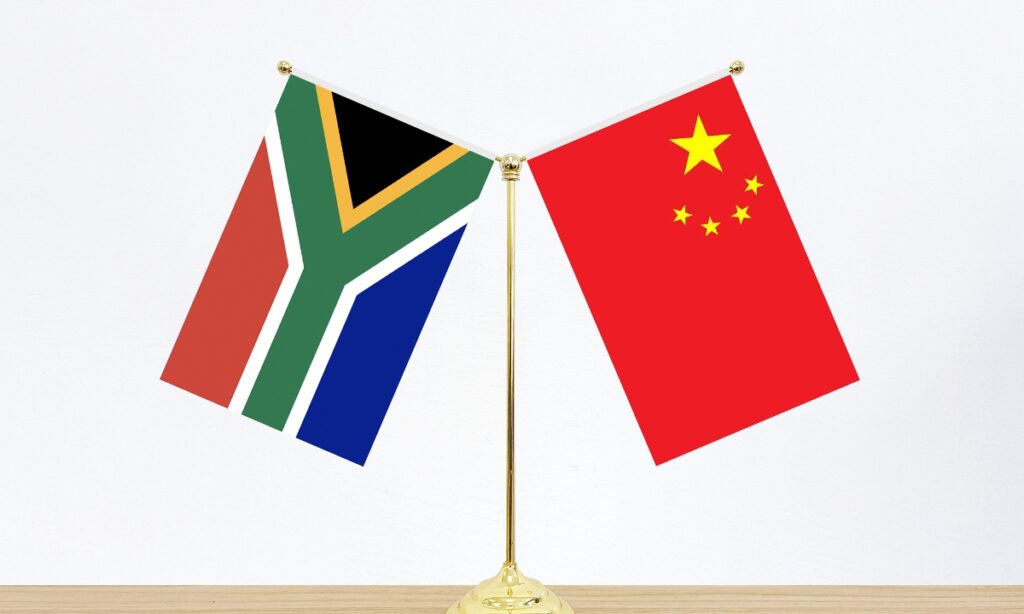
As Johannesburg prepares to host the first-ever G20 Summit on African soil, the spotlight is firmly on the growing voice of the Global South and at the center of this shift stand China and South Africa. In the days leading up to the summit, the Chinese Embassy in South Africa extended warm congratulations on the publication of Xi Jinping and the Global South, a new book by Professor David Monyae. The Embassy also expressed gratitude to South Africans from various sectors who have long supported the deepening of China–South Africa relations.

The event celebrating the book’s release became more than an academic gathering it was a timely reflection on a changing world order. With global governance structures being reshaped and developing nations demanding a greater say, China and South Africa are presenting themselves as key advocates for a more equitable international system.
A Global South Moment
Speaking at the event, Chinese representatives emphasized that the G20 Summit in Johannesburg represents a defining “Global South moment.” For the first time, the world’s largest economies will gather in Africa to address global economic challenges. China, a firm supporter of South Africa’s G20 Presidency, has expressed confidence that this summit will amplify the collective voice of the Global South and demonstrate its growing role in shaping global governance.

The discussion centered around a critical question: Where is the Global South headed, and how can China and the Global South move forward together? Drawing inspiration from Professor Monyae’s book, the event explored how emerging nations are reclaiming agency over their development paths and narratives.
Professor Monyae’s central argument that the Global South is not a mere geographic label, but a political identity born of shared histories of colonialism, struggle, and resilience resonated deeply. The concept embodies a collective consciousness and an assertion of dignity, rights, and responsibility. This, he argues, moves beyond outdated classifications such as “underdeveloped countries” or “the Third World,” which historically implied inferiority or dependency.

China’s diplomats echoed this sentiment, noting that today more than 130 nations identify as part of the Global South, representing approximately 85 percent of the world’s population and more than 40 percent of global GDP. Developing economies are now growing faster than developed ones, signaling a profound shift in the balance of global economic power.
China and Africa: Pillars of the Global South
China and Africa’s partnership has been at the heart of this transformation. From supporting Africa’s liberation movements in the mid-20th century to driving 21st-century development and modernization efforts, Beijing has maintained consistent engagement with the continent.
As the largest developing country, China considers itself a natural member of the Global South and continues to place cooperation with other developing nations at the forefront of its foreign policy. This commitment was reaffirmed through the China-Africa Changsha Declaration on Upholding Solidarity and Cooperation of the Global South, issued in June 2024 by China, 53 African nations, and the African Union. The declaration underscored the collective determination to strengthen multilateralism, promote fairness in international affairs, and advance shared prosperity.

Economic ties between China and Africa remain robust. For 16 consecutive years, China has been Africa’s largest trading partner. In 2024, China–Africa trade reached a record high of nearly US$300 billion, illustrating not only the scale of economic cooperation but also the potential for deeper integration in the years ahead.
Amid global economic turbulence from trade wars to protectionist measures China has taken concrete steps to support Africa’s development. It recently announced zero-tariff treatment for 100 percent of taxable tariff lines for products from all 53 African countries maintaining diplomatic relations with Beijing. This bold move is part of China’s effort to open its markets further, promote fair trade, and help African nations expand their exports and accelerate modernization.

China–South Africa: A Comprehensive Strategic Partnership for a New Era
Among African nations, South Africa occupies a unique position in China’s foreign policy. Since the establishment of diplomatic relations in 1998, the partnership has evolved through several stages from a partnership to a strategic partnership, then a comprehensive strategic partnership, and now a Comprehensive Strategic Partnership for a New Era.
This evolution reflects the growing depth of political trust and shared ambition between the two countries. In 2024, trade between China and South Africa accounted for nearly one-fifth of all China–Africa trade. Beyond commerce, the two nations collaborate closely in multilateral platforms such as BRICS and the G20, as well as in efforts to strengthen the voice of the African continent in global decision-making. Notably, both countries played a leading role in the recent expansion of BRICS and in advocating for the African Union’s inclusion in the G20 a landmark achievement for the Global South.

Looking ahead, China has pledged to deepen cooperation with South Africa across economic, cultural, and academic fields. The upcoming G20 Summit is expected to reinforce this commitment, providing a platform for both nations to advocate for reforms in global financial systems, greater representation for developing countries, and sustainable approaches to modernization.
A New Institute and a Shared Vision of Modernization
The collaboration between China and South Africa extends beyond economics and diplomacy into the realm of knowledge and innovation. At the same event celebrating Monyae’s book, a new “Institute for the Study of Chinese Modernisation” was inaugurated under the Center for Africa-China Studies at the University of Johannesburg.
This institute will serve as a hub for comparative research on development models and governance systems, providing a platform for scholars to explore how countries in the Global South can adapt lessons from China’s experience while following their own paths suited to their unique national contexts.

President Xi Jinping’s vision of “Chinese modernization” modernization for a large population, for common prosperity, combining material and cultural progress, promoting harmony between humanity and nature, and pursuing peaceful development stands in contrast to Western models of industrialization often associated with inequality and environmental degradation.
In parallel, South Africa and the broader continent are advancing the African Union’s Agenda 2063, which envisions a prosperous, integrated, and peaceful Africa. The convergence between China’s modernization principles and Africa’s development goals highlights a shared commitment to equitable growth, sustainability, and mutual respect.

Towards a Shared Future
As the G20 Summit opens in Johannesburg, the message from China and South Africa is clear: the world is entering a new phase in which the Global South will no longer remain a passive participant but an active shaper of global governance. The partnership between the two nations is not merely bilateral it represents a broader effort to redefine the norms of international cooperation, grounded in equality, respect, and shared development.

From trade to technology, from education to governance, China and South Africa are demonstrating that the future of the Global South lies not in imitation but in innovation. Their collaboration offers a model for how developing nations can assert their agency, chart their own course, and collectively build a fairer, more inclusive world order.
As global leaders gather in Johannesburg, the summit will not only address the pressing challenges of the global economy it will also symbolize the coming of age of the Global South. And in this historic moment, the partnership between China and South Africa stands as both a testament to past solidarity and a blueprint for the future.
About the Author