Political Killings Task Team Under Scrutiny as Docket Dispute Raises Concerns
 Viable News Team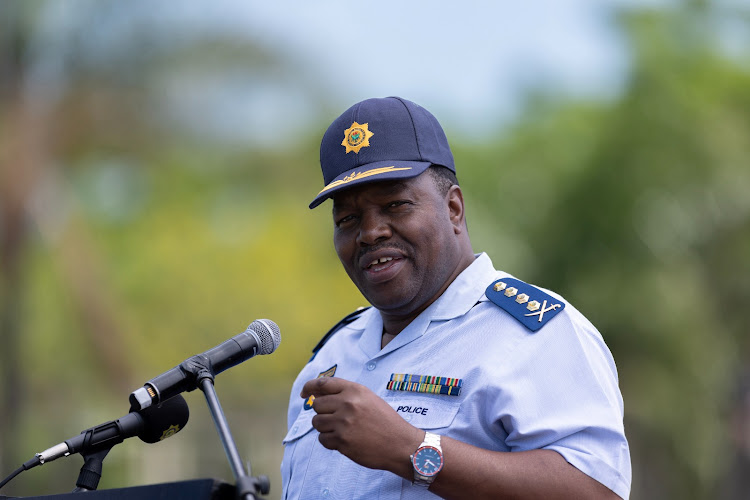
The decision by National Police Commissioner Fannie Masemola to return case dockets to the Political Killings Task Team in KwaZulu-Natal (KZN) has sparked a wave of concern and criticism from within government and Parliament.

The move comes at a sensitive time, with the Madlanga Commission of Inquiry preparing to probe deep-seated allegations of corruption and mismanagement within the South African Police Service (SAPS). Critics fear that Masemola’s decision may undermine or pre-empt the commission’s work, while others argue it could help restore continuity to investigations into one of the country’s most pressing security crises.
The Shadow of Political Killings in KZN
KwaZulu-Natal has, for years, been regarded as the epicentre of politically motivated killings in South Africa. Local councillors, activists, and even senior party leaders have been assassinated in a wave of violence that has destabilised communities and threatened democratic processes.

The Political Killings Task Team was established as a specialised unit to tackle these cases, combining intelligence, investigative, and prosecutorial expertise. Yet, despite its mandate, questions have lingered over the team’s effectiveness, independence, and alleged political interference.
It is against this backdrop that Masemola’s decision to send dockets back to the task team has raised eyebrows.
Cachalia Sounds the Alarm
Acting Police Minister Firoz Cachalia voiced concern over the commissioner’s move, cautioning that it may be premature. Cachalia stressed that the dockets form part of the very issues the Madlanga Commission was set up to investigate.
“There is a real risk that this decision could compromise the integrity of the commission’s work or create the perception of interference,” Cachalia said. He urged for patience and alignment between the SAPS leadership and the commission to avoid undermining public trust.

Opposition Voices Weigh In
The debate has also reached Parliament, where opposition parties are keeping a close eye on developments within the police service. Lisa Schickerling, a Democratic Alliance (DA) Member of Parliament serving on the Police Committee, criticised the timing of Masemola’s move.
“The timing is wrong. It can be seen as a step towards restoring investigative continuity and potentially advancing justice for the victims and their families, but it risks being interpreted as an attempt to bypass or influence the commission’s mandate,” Schickerling said.
Her comments reflect broader concerns that the SAPS leadership may not be fully aligned with President Cyril Ramaphosa’s directive to clean up the police service and root out corruption.
The Role of the Madlanga Commission
Announced by President Ramaphosa, the Madlanga Commission of Inquiry was tasked with probing allegations of corruption, maladministration, and failures within SAPS, particularly regarding high-profile cases such as political killings. The commission is expected to scrutinise not only individual cases but also the broader structural weaknesses that have allowed impunity to flourish.
Returning dockets to the task team at this juncture could muddy the waters, potentially creating confusion about which body has ultimate jurisdiction and accountability.
Balancing Justice and Oversight
For families who have lost loved ones in the political killings epidemic, every delay represents another wound left unhealed. There is frustration at what often feels like a lack of justice and accountability. In this sense, some argue that Masemola’s decision could inject momentum into stalled investigations.
Yet others stress that short-term progress must not come at the cost of long-term transparency. The Madlanga Commission, they argue, must be allowed to conduct its work without parallel processes undermining its credibility.

A Test for SAPS Leadership
The latest controversy underscores the difficult balancing act facing SAPS leadership: the need to deliver justice swiftly for victims of political killings, while also ensuring that the broader system is transparent, accountable, and free of corruption.
For Masemola, the decision to return the dockets may have been motivated by a desire to ensure continuity in investigations. But as Cachalia and other critics point out, the perception of pre-empting or side-stepping an inquiry set up by the President could have lasting political consequences.
Conclusion
The return of political killings dockets to the KZN task team has ignited a debate about timing, accountability, and the future of justice in South Africa’s troubled political landscape.

As the Madlanga Commission prepares to begin its work, the spotlight will remain firmly on the SAPS. Whether Masemola’s decision will be remembered as a step towards restoring order or as a misstep that compromised oversight will depend on what unfolds in the weeks ahead.
About the Author