B R Hlambela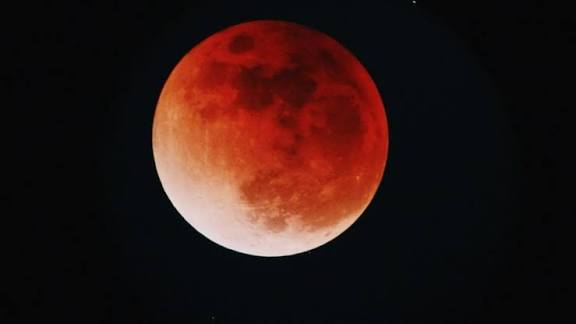
Commonly called a blood moon, when the Earth passed between the Sun and the Moon, casting Earth’s shadow across the Moon, causing it to take on a reddish hue.
African News Agency+3GroupEditors+3EWN+3The full (totality) phase lasted about 82 minutes, making it one of the longer total lunar eclipses visible this decade.
Diamond Fields Advertiser+2GroupEditors+2The best visibility across South Africa was in the evening hours, with peak eclipse around 8:11 pm SAST.
EWN+2The Bulrushes+2Public & Cultural ReactionsHere are several ways people in South Africa responded:Stargazing & Science EngagementMany astronomy enthusiasts and institutions (e.g. SA Astronomical Observatory) encouraged the public to go outside, observe, share images.
EWN+2The Bulrushes+2There were public events (viewings) to help people get better views. The Bulrushes+1Social Media BuzzLarge numbers of people shared photos and live footage of the blood moon, often highlighting how striking the red glow looked.
African News Agency+2Briefly+2Some images and videos went viral, including time-lapses and shots from iconic locations (like Table Mountain in Cape Town).
Briefly+1Also, people commented on how technology has made this kind of astrophotography more accessible (smartphones, etc.).
Briefly+1Traditional / Spiritual InterpretationsTraditional leaders and healers in parts of South Africa interpreted the eclipse as a sign of prosperity, good harvests, rains, and peace.
ZoutnetSome saw it as ancestral communication or a period for reflection and purification.
ZoutnetMixing of Science and BeliefSome respected both scientific explanations (Earth’s shadow, atmospheric light scattering) and traditional knowledge, seeing them as complementary.
ZoutnetOthers emphasized their ancestral knowledge and beliefs, saying that while science explains how, tradition understands why. ZoutnetNotable Themes & TensionsAtmosphere & Weather Conditions: Not everyone had perfect skies.
Clouds or atmospheric haze impacted visibility in some places. Some viewers were disappointed because they couldn’t see the eclipse clearly. BrieflyCultural Pride: The event sparked pride, especially when photographs from local scenes or cities were shared.
The idea of people seeing the event from recognizable South African settings added to its resonance.
Access & Technology: The increasing power of mobile photography (smartphones) was noted as enabling more people to capture images without having to have professional equipment.
This both democratizes the experience and adds to the social media sharing.Respecting Multiple Worldviews: There is a tension sometimes between scientific and traditional/spiritual interpretations.
Some people see those interpretations as incompatible; others embrace both.What the Reaction Tells UsPeople are eager to connect with natural and celestial phenomena, particularly when they are visible and dramatic.
Scientific institutions and media have a strong role in helping the public understand when, how, and why these things happen.
Traditional leaders continue to have cultural influence, especially in interpreting meaning, and many South Africans value those interpretations.
Technology (smartphones, cameras, social platforms) plays a big part in how these experiences are shared and remembered.
About the Author


 Viable News Team