Yasuo Takamatsu, the Japanese man who has been diving for years in search of his wife lost in the 2011 Tōhoku earthquake and tsunami.
 B R Hlambela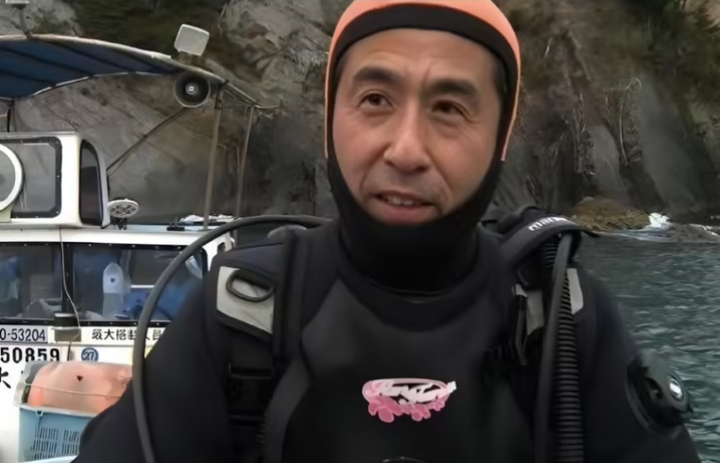
IMAGE CREDIT TO NDTV
On March 11, 2011, a magnitude‑9.0 earthquake struck off the Pacific coast of Japan.
The resulting tsunami devastated large parts of the Tōhoku region.
Among the many lives upended was that of Yasuo Takamatsu, a man from Onagawa in Miyagi Prefecture, whose wife, Yuko, was lost when the waves struck.
Yuko was working at a bank when the earthquake hit.
She managed to send a final message to Yasuo: “Are you OK? I want to go home.”
That was the last he heard from her.
Several days later, Yasuo found her cellphone in the bank’s parking lot.
But since then, no concrete trace of her remains has been recovered.
From land search to sea for about two and a half years after the tsunami, Yasuo searched on land — going through shelters, looking at morgues, and checking through debris and ruins, hoping for any clue of her fate.
In 2013, he decided to take diving lessons.
The ocean, he believed, might hold what land could not.
He dives, unwavering with hope since becoming a diver, Yasuo has made hundreds of dives (estimates are over 600-650) in the waters off Onagawa, looking for remains, artifacts, or any hint of where Yuko might be.
He dives nearly every week.
He is assisted by volunteer divers, including his instructor, Masayoshi Takahashi, who has experience in underwater search and cleanup operations in tsunami‑affected zones.
Motivation & meaning that drives Yasuo isn’t just the hope of finding his wife’s remains, but fulfilling her final wish: to return home.
That message, “I want to go home,” has become a kind of guiding light — for him, for his memory of Yuko, and for many who hear his story.
He acknowledges how unlikely recovery of human remains is, especially after so many years.
But to him, giving up isn’t an option.
The act of searching is itself part of honoring her.
Yasuo and Yuko were married in 1988, and they had two children.
The tsunami left not only physical destruction, but emotional and spiritual trauma.
His story has touched many people, both in Japan and internationally. It has been chronicled in documentary films and books.
The 2011 tsunami took nearly 20,000 lives, and left many thousands more missing.
In Miyagi Prefecture and elsewhere along the coast, there remain countless individuals whose fate remains unconfirmed.
Underwater searches in tsunami areas are deeply challenging: debris, changed seabed landscapes, currents, and ecological degradation all complicate locating remains after long periods.
Weather, legal and safety issues also factor. Yasuo’s diving is done in murky, cold water, often over areas with vast debris fields.
Where things Stand now as of the most recent reports:Yasuo is in his late 60s and continues his weekly dives.
He has recovered some belongings (items washed ashore or underwater debris), but nothing definitively linked to Yuko’s body.
The emotional burden is heavy, but he persists.
Many who hear his story are deeply moved.
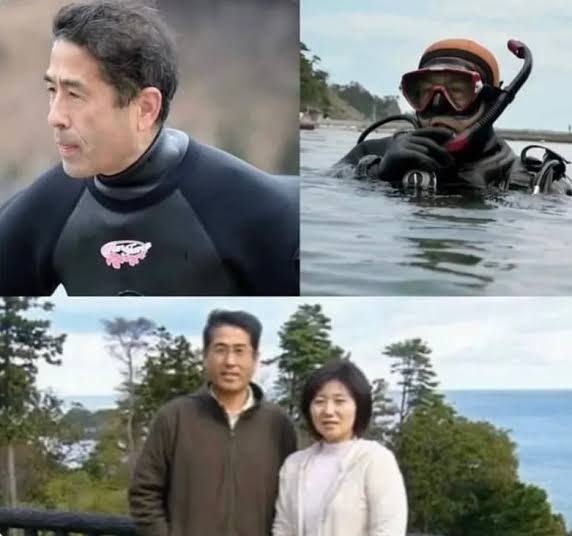
IMAGE CREDIT TO REDDIT
What this means Yasuo’s story is more than one individual’s quest; it raises broader themes:Grief and closure: How do people live without knowing? For many of the missing, there is no grave, no funeral — yet those left behind often feel it’s their duty to keep searching or remembering.
Yasuo understands the odds are slim.
But sometimes, hope isn’t about probability — it’s about love and memory.
His journey is supported by people who help with searches, scuba training, and logistics.
In disasters, individual action often depends on collective effort.
Thirteen years on, many Japanese families are still dealing with unresolved loss. Mental, social, and economic effects continue to ripple through communities.
About the Author

 Viable News Team