“We Just Want Water – Even if It’s Dirty”: Hammanskraal Residents Plead Amid Ongoing Crisis
 Viable News Team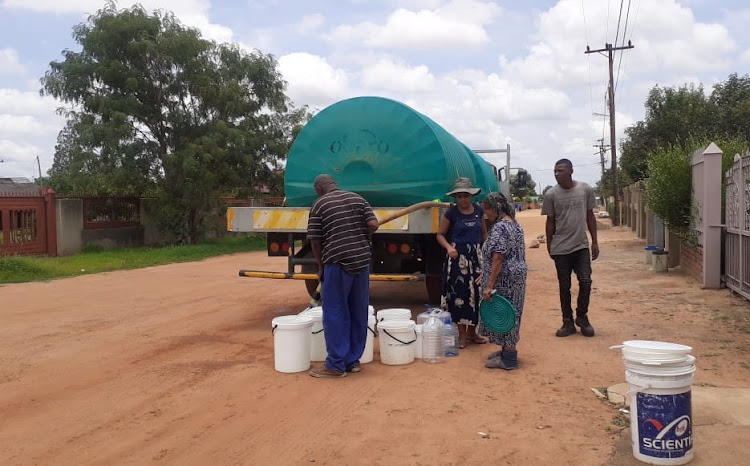
By [Viable Media]
In Hammanskraal, north of Pretoria, a glass of clean water has become a distant dream a luxury that residents have learned to live without. Now, the desperation has grown so intense that some are no longer asking for safe, drinkable water. They’re asking for the return of the dirty water that once flowed through their taps.
“We no longer want the trucks. We want the water that was coming out of the taps, as dirty as it is,” a weary resident said this week. “It’s been years of drinking that water because we are treated like pigs. So we want it back.”
These aren’t the words of someone who doesn’t understand the dangers of contamination. These are the words of someone who has been forced to choose between thirst and disease for far too long.
A Crisis with No End in Sight
The government has failed again to meet its own deadline for resolving the Hammanskraal water crisis. The Klipdrift Water Treatment Works, which was supposed to be fully operational by now, is still not pumping clean water to the community, despite promises made with fanfare.
“The team is working tirelessly, and we are winning the war. By the deadline, they will get clean water,” said Tshwane Deputy Mayor Bonzo Modise just last month. That deadline has come and gone. The taps remain dry.
Modise’s optimism now rings hollow in a town where broken promises have become part of the daily routine.
In June, the City of Tshwane officially handed over module two of the Klipdrift plant an expansion supposedly capable of improving water quality and supply. But progress has been glacial, and implementation riddled with technical delays and bureaucratic finger-pointing.
Blame Without Accountability
With tensions rising, the government has entered its favorite defensive mode: pass the buck.
When asked for comment, the Tshwane Mayor’s office referred questions to the MMC for Utilities, Frans Boshielo, who, in turn, pointed to Magalies Water and the Department of Water and Sanitation. Neither entity has issued a clear statement on the reasons for the delay.
The result is a political merry-go-round where accountability vanishes at every turn.
Meanwhile, residents continue to rely on sporadic water tankers when they show up. Often, they don’t.
“When we hear the tankers, we run. Children run barefoot across the gravel just to get a bucket. But most days, there’s nothing,” says Zanele Mokoena, a single mother of three. “We use rainwater when we can. And when we can’t, we go without.”
Years of Neglect and a Pandemic Flashpoint
The water crisis in Hammanskraal isn’t new. It dates back nearly a decade, long before COVID-19 brought renewed focus to the importance of hygiene and sanitation. Yet despite the attention, very little has changed.
In 2019, a cholera outbreak linked to contaminated water in the area highlighted the public health risks of the crisis. International media took notice. Government leaders visited, posed for cameras, and made promises.
Five years later, cholera has returned in parts of the country, and Hammanskraal residents say they feel no safer.
“This is not just about infrastructure,” says water governance expert Professor Thuli Ndlovu from the University of Pretoria. “It’s about political will, corruption, and a systemic failure to treat water as a human right rather than a service for profit or prestige.”
Lives on Hold
The impact of the crisis reaches far beyond basic health. Residents have delayed weddings and funerals due to water shortages. Businesses have closed. Schoolchildren miss classes during tanker collection days. Clinics struggle to maintain hygiene standards.
“We are tired,” says community activist Sello Matlala. “Tired of meetings. Tired of statements. Tired of lies. If government leaders lived here for just one week, this would be fixed in days. But they don’t. So we wait. And suffer.”
The Cost of Failure
Water is not just a basic need; it is a constitutional right in South Africa. Section 27 of the Constitution states that “everyone has the right to have access to sufficient food and water.” The repeated failure to provide even dirty water reliably let alone clean water is not just a policy failure. It is a violation of rights.
“There is a clear pattern of broken governance in Hammanskraal,” says constitutional lawyer Sipho Msimang. “And in any functioning democracy, heads should have rolled by now.”
But no one has been held accountable.
A Town at Breaking Point
As Hammanskraal limps through yet another broken deadline, residents have reached an emotional tipping point.
They are no longer shouting for clean water. They are pleading for any water. Even if it’s dirty. Even if it’s dangerous. Because for many, the idea of a working tap has become as mythological as clean rivers and honest politics.
And yet, amid the despair, there is still resistance. There are protests, petitions, and community meetings. Residents still demand answers. They still hope because giving up means accepting that they were never meant to matter.
The Real Question
If Hammanskraal was a wealthy suburb of Pretoria, would this have gone on for years? Would deadlines be missed with impunity? Would the people have to beg for dirty water?
Those are the questions no one in power seems willing to answer. But they are the questions that define this moment.
Because in the heart of one of Africa’s most developed economies, people are still waiting for the most basic of human needs.
Not for luxury. Not for comfort. Just for water.
About the Author