Viable News Team
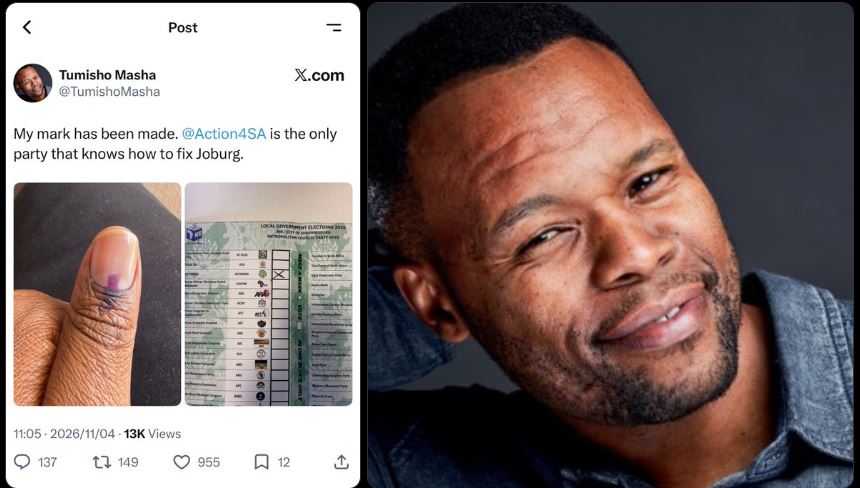
South African actor Tumisho Masha has come under scrutiny after sharing a photograph of his marked ballot paper during the 2026 Local Government Elections, prompting questions about compliance with electoral rules and whether the law is being applied equally to all voters.
Masha posted an image showing his inked thumb alongside a City of Johannesburg ballot paper marked for ActionSA. He accompanied the post with a message expressing support for the party, saying it was the only one he believed could fix Johannesburg.
The matter has reportedly been referred to Gauteng SAPS by the Justice, Crime Prevention and Security cluster for further handling. Masha declined to comment when approached about the potential investigation.
What does the law say?
The Electoral Commission of South Africa (IEC) has repeatedly warned voters that photographing a completed or marked ballot paper is prohibited. The rule is intended to protect the secrecy of the vote and prevent situations where voters could be pressured to provide proof of how they voted.
Under Regulation 38(1A) of the Election Regulations, taking a photograph or another image of a marked ballot paper is an offence. A person convicted of contravening the regulation may face a fine or imprisonment for up to one year.
Voters are, however, allowed to share photographs of their inked thumbs, provided the marked ballot paper is not visible.
Questions over selective enforcement
Masha’s case has also triggered debate on social media, with some users calling for action against him, while others are questioning why the actor has attracted particular attention when other voters have also reportedly shared photographs of their marked ballots.
The concern being raised is whether the rules are being enforced consistently, regardless of whether the person involved is a public figure or an ordinary voter.
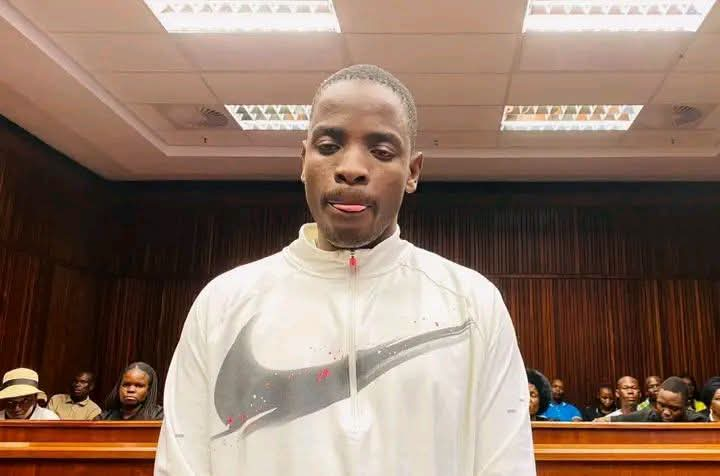
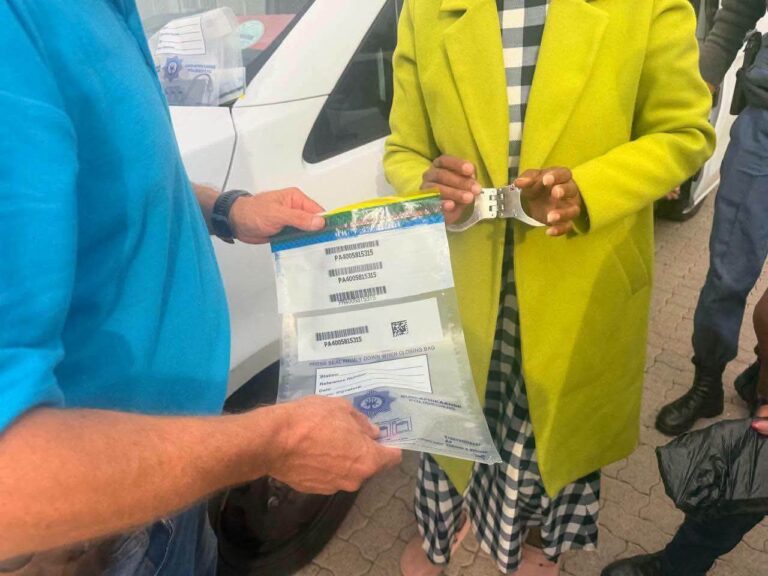
There have also been other reported cases during the elections. In Limpopo, police confirmed the arrest of a 32-year-old man accused of photographing and sharing an image of his marked ballot paper. Police said they were also searching for a second suspect in a related incident.
The key issue is therefore not whether the rule applies to Masha alone, but whether every reported violation is investigated and handled fairly.
For now, the reported referral involving Masha does not amount to a conviction. The outcome will depend on the investigation and any further action by the authorities.
About the Author