Smear Campaigns and Factional Fire: IFP Leader Velenkosini Hlabisa Faces Political Storm Ahead of Elective Conference
 Viable News Team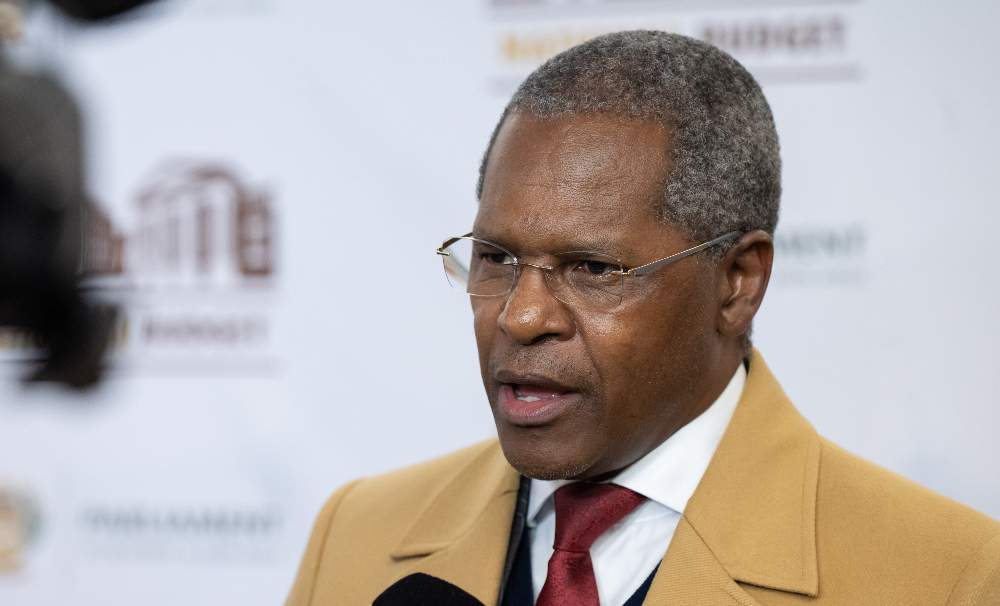
By [Viable Media]
Durban – August 2025
As the Inkatha Freedom Party (IFP) prepares for its critical national elective conference, the storm clouds of internal division appear to be gathering with intensity. Party leader Velenkosini Hlabisa has publicly alleged a coordinated campaign to tarnish his reputation, accusing unnamed comrades within the party of orchestrating a smear campaign against him.
Speaking at the IFP Women’s Brigade celebration of Women’s Month in Durban, Hlabisa did not hold back. His tone was defiant his message clear.
“Against all odds and against the new character assassination thrown at my doorsteps, I will soldier on,” he declared to a supportive crowd. “I will become the champion of the IFP Women’s Brigade in deployment in key positions in the spheres of government and also I will become a champion to be a defender of our women within our party and society.”
His remarks come at a volatile time for the IFP, a party that is attempting to reinvent itself in a changing political landscape following the passing of its revered founder, Prince Mangosuthu Buthelezi. The internal tensions that simmered quietly during Buthelezi’s later years are now threatening to boil over, just as the party faces one of its most decisive leadership moments in recent history.
The Specter of Factionalism
Factionalism is not a new phenomenon in South African politics but within the IFP, it is particularly fraught. In 2017, the late Buthelezi issued a stark warning to party members about the destructive nature of internal divisions. He feared that factional battles, if left unchecked, could tear the party apart from within.
Today, those fears seem prophetic.
Insiders point to growing tensions between traditionalists loyal to Buthelezi’s legacy and younger leaders pushing for structural reform. While the IFP has enjoyed renewed attention and modest electoral gains in recent years, especially in KwaZulu-Natal, internal squabbles threaten to derail that progress.
Political analyst Dr. Zakhele Ndlovu believes what’s unfolding is part of a broader pattern in South African party politics.
“What we have seen with the top or big five parties is that whenever they are headed to a conference, divisions emerge,” Ndlovu noted. “We saw this with the EFF last year and with the ANC on multiple occasions. The IFP is now facing a similar storm.”
Ndlovu warns that unless the party decisively quashes factionalism, it risks fragmentation and irrelevance. “The IFP must immediately bury factions and lobby groups in order to unify under a common vision,” he added.
A Battle for the Soul of the Party?
While Hlabisa has not named those behind the alleged smear campaign, political watchers say the internal friction is intensifying as leadership positions and their associated influence come up for grabs. Whispered accusations, leaked documents, and social media attacks have reportedly escalated as the conference nears.
Supporters of Hlabisa argue that he is being targeted because of his reformist stance and willingness to challenge outdated power structures within the party. His detractors, however, claim he is consolidating power too tightly and alienating key figures along the way.
The truth, as is often the case in political dogfights, may lie somewhere in between.
What is clear is that the coming weeks could either reaffirm the IFP’s cohesion and future relevance—or expose the depth of its internal fractures.
The Women’s Brigade and the Struggle for Representation
Amid the political turmoil, Hlabisa’s speech also highlighted another key issue: the role of women within the IFP and the broader political landscape.
Pledging to champion the cause of women’s representation in government and within the party, Hlabisa framed his leadership as not just a political responsibility, but a social one. His remarks struck a chord with many in the audience, particularly at a time when gender equity in South African politics remains inconsistent and contested.
The IFP Women’s Brigade, historically sidelined in strategic decision-making, is now pushing for a larger voice and Hlabisa has positioned himself as their ally.
Whether this advocacy is enough to cement his leadership credentials within a divided party remains to be seen.
The GNU Factor: Navigating a New Political Terrain
Beyond its internal battles, the IFP is also navigating complex external pressures. As part of the Government of National Unity (GNU), the party is expected to play a stabilizing role in a precariously balanced coalition. This position requires unity and discipline two things that internal smear campaigns and factional warfare actively undermine.
Public infighting, analysts warn, may weaken the party’s negotiating strength within the GNU and damage its credibility with voters already disillusioned by corruption, unemployment, and poor service delivery.
Looking Ahead: Will the Centre Hold?
As the IFP’s national elective conference draws near, all eyes will be on Hlabisa not just to see if he retains the top seat, but to observe how he manages an increasingly fractured party.
Will he emerge as a unifier capable of steering the IFP into a new era of relevance? Or will the party follow the path of so many others before it, descending into a spiral of internal conflict and decline?
For now, Hlabisa remains defiant. But the real test of leadership, as Prince Buthelezi often reminded his followers, is not in surviving personal attacks but in rising above them for the greater good.
Sidebar: The IFP’s Legacy at a Glance
- Founded: 1975 by Prince Mangosuthu Buthelezi
- Ideology: Conservative, Zulu nationalism, federalism
- Key Base: KwaZulu-Natal
- Recent Performance: Increased local election support in KZN and parts of Gauteng
- Current Challenges: Internal factionalism, leadership transitions, balancing tradition with modernization
About the Author