Organised Crime Expands Across South Africa as Mafia Networks Tighten Grip
 Viable News Team
Johannesburg – South Africa is increasingly being engulfed by organised criminal networks, with a new report warning that the country is becoming a breeding ground for global syndicates. According to the latest data from the Global Initiative Against Transnational Organised Crime (GI-TOC), South Africa now ranks seventh in the world for organised crime a startling position that places it just behind notorious hotspots like Mexico, Colombia, and the Democratic Republic of Congo (DRC), and only slightly ahead of Nigeria.

The report paints a grim picture of a country where criminal enterprises are expanding faster than state capacity to respond. From drug trafficking and cybercrime to counterfeiting and human trafficking, the breadth and sophistication of criminal operations have intensified in recent years.
“It’s now more evident than ever that the mafia is taking over the country,” said one analyst reacting to the findings. “Organised crime is no longer operating in the shadows it’s embedded in legitimate sectors and exploiting weak governance structures.”

A Networked Underworld
The GI-TOC report highlights that South Africa’s criminal ecosystem has become deeply entrenched and interconnected, with links stretching across the continent and beyond. The country’s well-developed infrastructure, strategic location, and relatively open economy have made it a convenient hub for transnational syndicates.

Among the most prevalent crimes identified are:
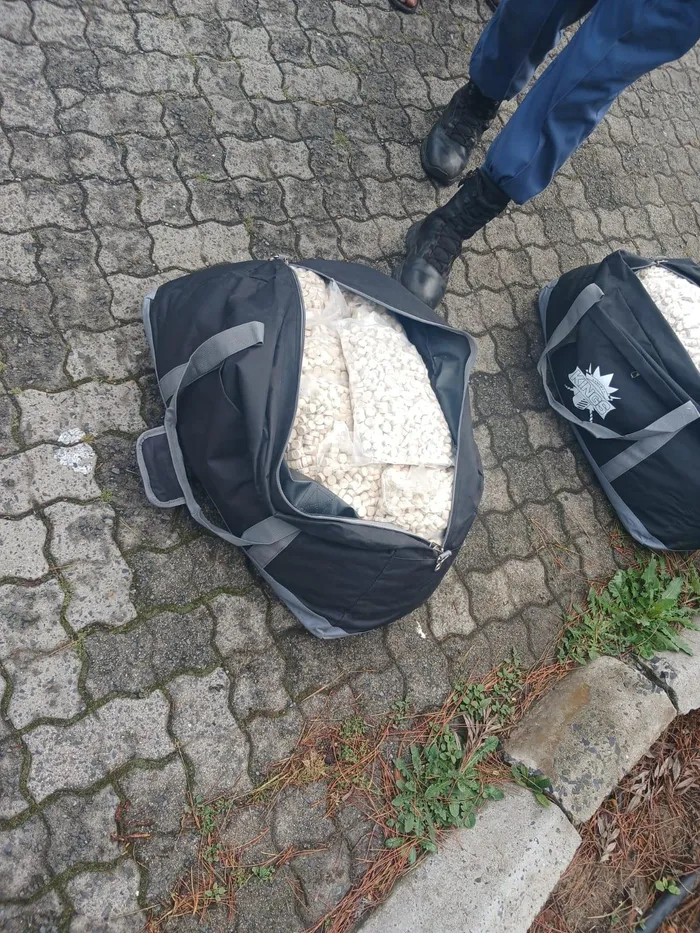
- Synthetic drug trafficking, particularly methamphetamine (“tik”) and MDMA production and distribution;
- Cybercrime, including large-scale financial scams, identity theft, and ransomware attacks;
- Counterfeiting and smuggling, with counterfeit goods flooding local markets and costing billions in lost revenue;
- Wildlife and resource trafficking, such as rhino horn, abalone, and precious metals.
According to Rumbi Matamba, a senior researcher at the Global Initiative, these networks are becoming more global and technologically advanced.
“Criminal actors are adapting quickly to new technologies from cryptocurrencies to encrypted communications while law enforcement capacity is struggling to keep pace,” Matamba explained. “The problem is compounded by weak cooperation between countries, which makes it harder to track and disrupt these networks.”

Weak Institutions, Strong Criminals
South Africa’s organised crime boom has been fuelled by institutional fragility, corruption, and political interference, according to the report. With police capacity stretched thin and corruption allegations persisting in key law enforcement agencies, syndicates have found room to thrive.
Criminals are exploiting state capture legacies, infiltrating municipalities, and manipulating public procurement systems to launder money or gain access to resources. The result is a complex web where politics, business, and crime intersect making accountability even more elusive.
Experts warn that the erosion of public trust in government institutions further empowers these networks. “Where governance fails, organised crime fills the gap,” one security analyst noted. “It provides employment, protection, and even social services in some communities at a devastating long-term cost.”

Global Trends, Local Consequences
The rise in South Africa’s ranking comes as part of a broader global trend in which transnational organised crime is outpacing international cooperation. The GI-TOC report stresses that while criminal groups have adapted to globalization, law enforcement efforts remain largely local and fragmented.
Matamba said that global cooperation on tackling organised crime has weakened, particularly as governments focus inward amid economic and political challenges.
“Criminal groups collaborate across borders more efficiently than governments do,” she said. “They share resources, intelligence, and logistics while most states are still working in isolation.”
The social impact of these crimes is already evident. Drug addiction, violent extortion, and money laundering have contributed to community destabilisation and economic decline, particularly in urban centres like Johannesburg, Durban, and Cape Town.

The Way Forward
To curb the rise of organised crime, experts recommend a multi-layered approach that combines stronger governance, regional cooperation, and technology-driven policing. Anti-corruption reforms, improved intelligence sharing, and cross-border enforcement partnerships are seen as critical to reversing the current trajectory.
Matamba emphasised that South Africa must invest in data-driven crime prevention and rebuild trust between communities and law enforcement.
“Organised crime thrives in environments of inequality and mistrust,” she said. “If South Africa is to reclaim its institutions, it must tackle both corruption and social vulnerability.”

A Nation at a Crossroads
The findings serve as a stark reminder that organised crime is no longer a peripheral issue but a central threat to South Africa’s democracy and economy. As syndicates expand their influence, the state’s ability to enforce the rule of law and protect its citizens hangs in the balance.
If decisive action is not taken, analysts warn, the country could find itself trapped in a cycle where criminal power outpaces legitimate authority a scenario with devastating consequences for governance, investment, and public safety.
About the Author