Mantashe Pushes for More Local Oil Refineries as Global Conflict Drives Fuel Prices Higher
 Viable News Team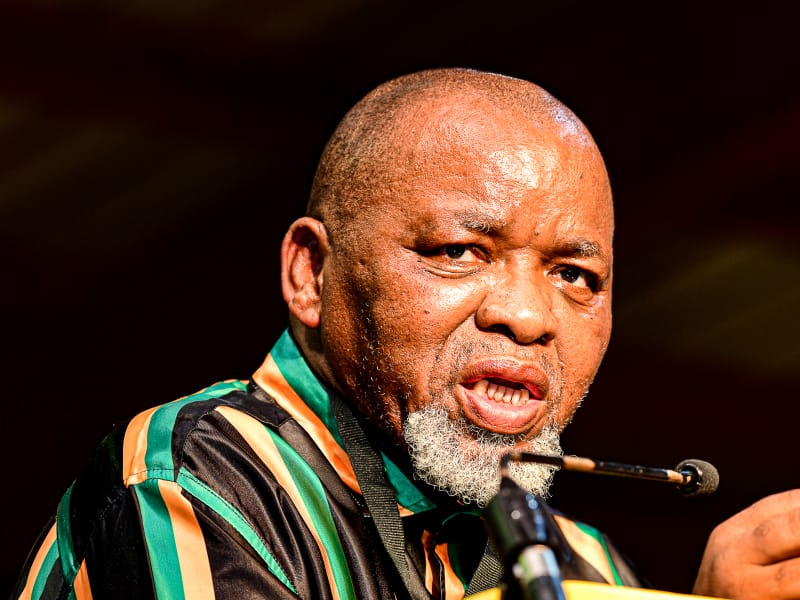
Image: ANC.ORG
South Africa’s Minister of Mineral and Petroleum Resources, Gwede Mantashe, has called for a major expansion of the country’s fuel refining capacity as global tensions push oil prices higher and threaten to raise domestic fuel costs.
Speaking at the Southern Africa Oil and Gas Conference in Cape Town, Mantashe warned that escalating conflict in the Middle East and disruptions to global oil infrastructure could worsen energy insecurity and increase the cost of living for South Africans.

Oil prices have surged above $100 per barrel amid geopolitical tensions involving Israel, the United States and Iran, placing additional pressure on fuel-importing nations such as South Africa.
Push to Expand Local Refining Capacity
Mantashe said South Africa needs to strengthen its domestic refining capability to protect the economy from volatile global energy markets.
Currently, the country relies on a small number of operational refineries, including Natref in Sasolburg, the Astron Energy refinery in Cape Town, and Sasol’s synthetic fuel facility at Secunda.
However, several other refineries have closed or halted operations in recent years because they require costly upgrades estimated at R40 billion to R60 billion to meet modern clean fuel standards.
At its peak around 2010, South Africa produced about 600,000 barrels of crude and synthetic fuel per day from six refineries. That figure has since fallen sharply as facilities shut down or scaled back production.
Today, only two crude refineries remain operational, producing a combined more than 200,000 barrels per day, while Sasol’s Secunda plant produces roughly 150,000 barrels of synthetic fuel daily.
Rising Dependence on Fuel Imports
As refining capacity has declined, South Africa has become increasingly dependent on imported fuel.
Local refineries once supplied about 80% of the country’s fuel demand, but this has dropped to around 35%, with imports now accounting for approximately 18.7 billion litres of fuel each year.
Much of the imported fuel comes from refineries in India, the Middle East and smaller “teapot” refineries in China, where environmental standards can be lower.
The country has also begun importing significant volumes of diesel from the massive Dangote Refinery in Lagos.
New State-Owned Energy Company Created
To strengthen the country’s energy security, government recently established the South African National Petroleum Company (SANPC).
The new entity combines assets from the Strategic Fuel Fund, iGas contracts and viable portions of PetroSA.
The company operates under the Central Energy Fund, with the goal of improving scale and efficiency across the petroleum sector.

However, opposition parties such as the Democratic Alliance have criticised the plan, warning that the new structure could become a “super state-owned enterprise” vulnerable to the same governance challenges that have affected other SOEs.
Offshore Oil and Gas Potential
Mantashe also highlighted South Africa’s untapped offshore petroleum resources, including gas discoveries in the Outeniqua Basin and major oil discoveries in Orange Basin, where exploration has intensified in recent years.
Geological studies suggest the Orange Basin discoveries made in Namibia could extend southwards into South African waters.
However, exploration efforts by companies such as Shell and TotalEnergies have faced legal challenges after courts overturned environmental authorisations for several offshore drilling projects.
These decisions have slowed exploration while appeals and regulatory reviews are underway.
Legislative Changes Planned
Government is introducing new legislation aimed at accelerating investment and exploration in the sector.
Key reforms include the Upstream Petroleum Resources Development Act, which separates oil and gas regulation from mining legislation and creates a single licence for exploration and production.
Another proposed reform, the Petroleum Products Bill, aims to streamline licensing processes for downstream petroleum activities and promote cleaner fuel standards.
Sapref Refinery Revival Plan
One of the biggest projects under discussion is the revival of the Sapref Refinery, which was acquired in 2024 by the Central Energy Fund from former owners Shell and BP.
The refinery, located in Durban, was heavily damaged during flooding and has been shut down since.
Government plans to rehabilitate and potentially expand its capacity from 180,000 barrels per day to more than 400,000 barrels per day, although construction has not yet begun.
Energy Security a Priority
Mantashe said supply disruptions and geopolitical instability highlight the need for South Africa to reduce reliance on imported fuel.
“Countries that rely heavily on imports of refined petroleum products remain particularly vulnerable to global market shocks,” he said.
Government is currently engaging with industry players to ensure stable fuel supplies while avoiding the need to tap into South Africa’s strategic fuel reserves.
About the Author