Hope on the Horizon: Trump-Brokered Talks Signal Potential Putin-Zelenskyy Peace Summit
 Viable News Team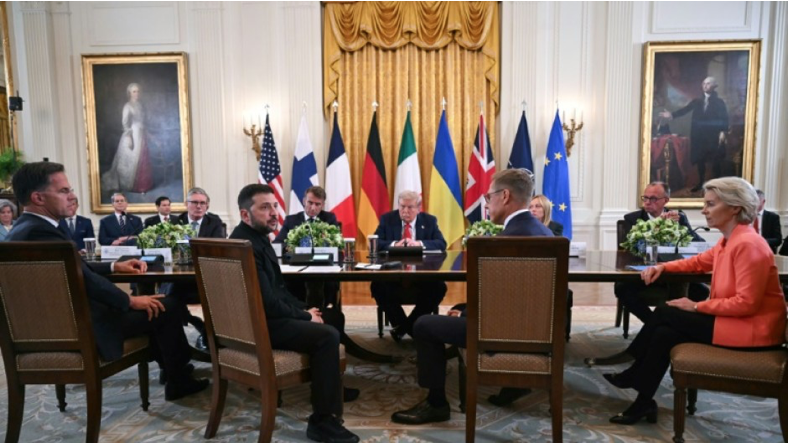
In what could mark a turning point in one of the 21st century’s deadliest conflicts, Presidents Vladimir Putin and Volodymyr Zelenskyy appear poised for their first direct meeting since Russia’s full-scale invasion of Ukraine over three years ago. The potential peace summit was catalysed by a flurry of high-stakes diplomacy involving U.S. President Donald Trump and top European leaders, culminating in a day of intense talks in Washington on Monday.
President Trump, who has repeatedly vowed to bring the war to a swift end if re-elected, announced that arrangements were underway for a face-to-face meeting between the Russian and Ukrainian leaders. Speaking on his Truth Social platform, Trump declared, “Everyone is very happy about the possibility of PEACE for Russia/Ukraine.”
The announcement came after Trump’s “very good” White House meetings with Zelenskyy and a coalition of European heads of state, and after a follow-up phone call with Putin whom Trump met in Alaska last week. The U.S. president also stated his intention to host a three-way summit between himself, Putin, and Zelenskyy, though a location and date have yet to be confirmed.
Zelenskyy Signals Readiness for Talks
Speaking to reporters outside the White House, President Zelenskyy confirmed his willingness to meet with Putin, despite nearly four years of bitter war that has left tens of thousands dead and millions displaced.
“I am ready,” Zelenskyy stated simply, standing on the White House lawn after what he called his “best” meeting yet with Trump. The two leaders, whose prior interactions were marred by visible tension, appeared more aligned this time Trump even complimented Zelenskyy on his attire, a contrast to earlier criticism from conservative media over the Ukrainian leader’s battlefield dress.
The meeting took place just days after Trump’s summit with Putin in Alaska failed to secure a ceasefire but set the stage for further negotiations.
Security Guarantees, Not NATO
The centerpiece of Monday’s talks was the prospect of long-term security guarantees for Ukraine. Trump confirmed that while NATO membership remains off the table long a red line for Moscow Putin had shown openness to an alternative framework for ensuring Ukraine’s safety.
Details remain murky, but according to the Financial Times, Ukraine has agreed to purchase up to $100 billion in U.S. military equipment, with financing largely backed by European allies, in exchange for coordinated security guarantees from the United States and its partners. Zelenskyy later spoke of a $90 billion deal and indicated that final terms would be formalized within 10 days.
“This is about stability, not surrender,” said NATO Secretary General Mark Rutte, who called Monday’s negotiations a “very successful meeting” and praised Trump for “breaking the deadlock.”
European Unity—And Unease
The presence of European leaders including those from France, Germany, the UK, Italy, Finland, and the European Commission underscored both the high stakes and the persistent anxieties over Trump’s approach to the war.
German Chancellor Friedrich Merz was unequivocal in rejecting Russia’s demands that Ukraine cede the Donbas region. “The Russian demand that Kyiv give up the free parts of Donbas corresponds, to put it bluntly, to a proposal for the United States to have to give up Florida,” he said.
French President Emmanuel Macron also warned of consequences if Putin failed to follow through on peace negotiations, calling for a tightening of sanctions against Moscow.
Finnish President Alex Stubb struck an even more cautious tone: “Putin is not to be trusted,” he said, echoing concerns across much of Europe that any peace deal could simply be a strategic pause for Russia to regroup.
Trump’s Balancing Act
The possibility of peace talks comes at a critical moment for Donald Trump, now 79, who has made ending the Ukraine war a signature promise of his foreign policy agenda. However, his perceived friendliness toward Putin has repeatedly raised concerns both in Europe and among some U.S. lawmakers.
In recent weeks, Trump has reportedly urged Ukraine to abandon its claim to Crimea and to drop its NATO ambitions—both longstanding Russian demands. While those recommendations have drawn criticism, Trump’s allies argue that realism is required to end the bloodshed.
“This isn’t about winning or losing; it’s about ending the war,” said one senior administration official.
Next Steps
While the timeline and location for the Putin-Zelenskyy summit remain unclear, the consensus among Western leaders is that the window for diplomacy is now open however narrow or fragile it may be.
The war in Ukraine, now entering its fourth year, has largely devolved into a bloody stalemate, with neither side making significant territorial gains in recent months. Yet the human cost continues to mount, and public fatigue—both in Ukraine and abroad has created pressure for a negotiated solution.
Whether the long-awaited summit can deliver a durable peace remains to be seen. But for the first time in years, leaders are openly speaking the word that has felt out of reach for so long: Peace.
About the Author