“A Deadly Withdrawal: How Trump-Era Funding Cuts Are Leaving Zimbabwe’s HIV Patients to Die”
 Viable News Team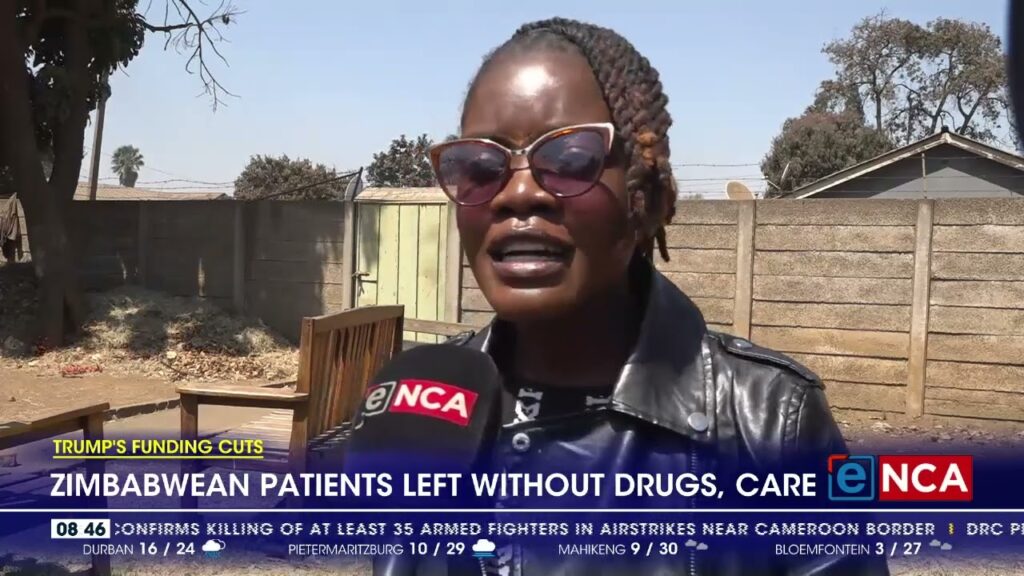
In a modest clinic on the outskirts of Harare, 34-year-old Miriam Dube sits silently on a wooden bench, cradling her baby in her arms. She hasn’t had access to her life-saving HIV medication in over a month. “I feel weaker every day,” she whispers, barely audible over the buzz of an old ceiling fan. “They told me the drugs are finished. There’s nothing left.”
For tens of thousands of Zimbabweans like Miriam, this is not just a medical emergency it’s a matter of life and death. A severe and escalating shortage of anti-retroviral therapy (ART) drugs and basic preventive tools like condoms has plunged the country’s HIV response into crisis. And experts are pointing the finger squarely at the United States.
According to Doctors Without Borders (MSF), this crisis is a direct result of funding cuts initiated under former U.S. President Donald Trump. During his presidency, Trump dramatically scaled back global health funding through programs like the U.S. Agency for International Development (USAID) and the President’s Emergency Plan for AIDS Relief (PEPFAR) both of which were critical lifelines for Zimbabwe’s battle against HIV and Aids.
A Decade of Progress, Now Unraveling
For years, Zimbabwe had been making commendable strides in the fight against HIV. PEPFAR and other donor programs helped supply anti-retrovirals (ARVs), train healthcare workers, and support testing and awareness campaigns. By 2020, new HIV infections were falling, and deaths were declining.
But since 2021, when Trump’s budget cuts began to take effect globally, the situation has reversed. “We are now seeing the unraveling of a decade’s worth of progress,” says Dr. Tinashe Mavhunga, a senior health officer in Harare. “The cuts have created a domino effect less money means fewer drugs, fewer staff, and less outreach. We are losing lives.”
Zimbabwe’s Ministry of Health reports that HIV-related deaths have sharply increased since January 2025, and officials fear the numbers will continue to rise if alternative funding is not secured soon. “We’ve gone from hope to helplessness in just a few short years,” says Dr. Mavhunga.
Condoms Gone, Clinics Crippled
Beyond the life-saving ARV drugs, even the most basic supplies have vanished from clinics. Condoms once freely distributed across the country are now scarce. This not only undermines HIV prevention efforts, but also threatens to drive up rates of other sexually transmitted infections (STIs) and unplanned pregnancies.
Rural clinics, which serve some of the country’s most vulnerable populations, have been hit hardest. Nurse Patience Nyoni, who works at a small health post in Matabeleland North, says her facility hasn’t received a drug shipment in two months. “We’ve had to turn away patients. Some of them never come back. We assume the worst.”
A Global Crisis, Local Consequences
While Zimbabwe is currently one of the most visibly affected countries, health experts warn that the ripple effects of Trump’s global health funding cuts are being felt across sub-Saharan Africa and beyond.
PEPFAR, established in 2003 under President George W. Bush, has been one of the most successful U.S. foreign aid programs in history. It has saved over 25 million lives, mostly in Africa. But the Trump administration viewed global health spending as an unnecessary burden on U.S. taxpayers, despite the relatively small share of the federal budget it represented.
As funding dwindled, so did access to HIV testing, treatment, and prevention across several nations including Zimbabwe. “What we’re seeing is not just budget tightening,” says Linda Moyo, a regional coordinator for MSF. “It’s a humanitarian catastrophe in slow motion.”
Searching for Solutions
The Zimbabwean government has begun appealing to other international donors, including the Global Fund, the European Union, and private foundations. But competition for aid is fierce, especially with global attention stretched thin by climate crises, regional conflicts, and economic instability.
Meanwhile, activists are urging the U.S. government under current President [Insert Name] to reconsider its stance on global health funding and restore support to the most vulnerable nations.
Back in Harare, Miriam Dube holds onto hope that help will come soon. “I want to live,” she says simply. “I want to see my child grow up. But I don’t know if I’ll make it.”
The Human Cost
It’s easy to talk about funding in terms of dollars and percentages, but behind every policy decision are real human lives—mothers, fathers, children who depend on these programs for survival. For Zimbabwe’s HIV patients, the withdrawal of U.S. support isn’t a political issue. It’s a death sentence.
Unless swift, coordinated action is taken by the international community, the consequences will be catastrophic and irreversible. The question that now hangs in the air is: who will step up before it’s too late?
About the Author