Viable News Team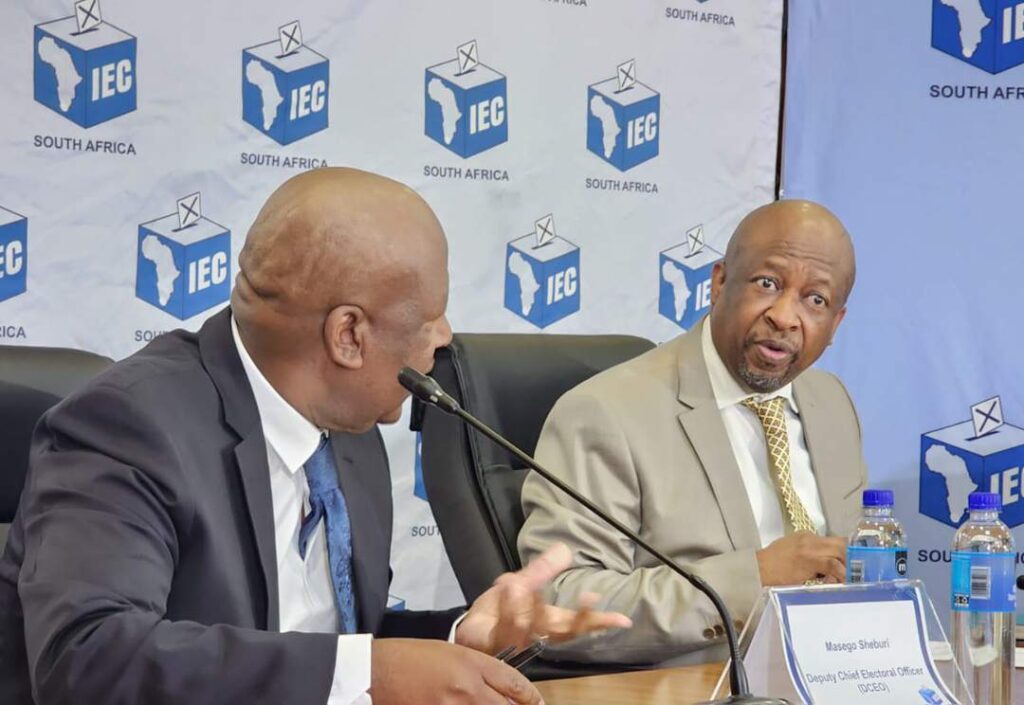
Johannesburg – South Africa’s Electoral Commission (IEC) has made it clear that there will be no delays in the much-anticipated 2026 local government elections, assuring the public that preparations are already well under way.

Although the official election date has yet to be proclaimed by the Minister of Cooperative Governance and Traditional Affairs, the polls are expected to take place between November 2026 and January 2027. For millions of South Africans who depend on local government structures for service delivery, these elections represent a critical opportunity to shape the leadership in their municipalities.
“Come Rain or Shine, the Elections Will Be Held”
At a recent media briefing, IEC Chief Electoral Officer Sy Mamabolo struck a confident tone about the commission’s readiness.
“Come rain or shine, the elections will be held,” Mamabolo told eNCA, underscoring the IEC’s determination to keep to schedule despite potential challenges.
Mamabolo emphasised that one of the commission’s immediate priorities is the finalisation of ward demarcations a crucial process to ensure that all voting districts align properly with voting stations.
“It is the basis on which an election rests. We first have to settle the issues of demarcation and ensure boundaries of wards and voting stations align. Once that is done, we then move to the voter roll,” he explained.
This process is vital, as the accuracy of electoral boundaries directly impacts representation, fairness, and voter confidence in the system.

New Political Players Enter the Arena
The political landscape is also shifting ahead of the 2026 elections. Since the 2024 general elections, Mamabolo revealed that 34 new political parties have registered with the IEC.
This surge highlights a growing appetite for political participation at the grassroots level, and it could reshape municipal councils across the country. Local government elections traditionally see smaller, community-based parties emerge, giving voice to localized concerns such as housing, electricity, water, and sanitation.
With more parties in the mix, voters are likely to have a wider range of options but it may also lead to more fragmented councils, where coalitions become necessary to govern effectively.
Strengthening the Foundation of Democracy
The IEC’s focus on readiness is not just about logistics it is also about trust. After years of contested elections, allegations of service delivery failures, and increasing voter apathy, the commission is under pressure to demonstrate that it can conduct free, fair, and credible elections.
Ward demarcations, the integrity of the voters’ roll, and the smooth functioning of voting stations will all play a decisive role in ensuring confidence in the outcome.
The commission is also expected to intensify voter education campaigns in the run-up to 2026, encouraging participation, especially among the youth, whose turnout has historically been lower compared to older generations.

The Road Ahead
While the exact election date remains to be announced, the IEC has already made clear that the timeline will not slip. Preparations will accelerate over the coming months, from the technical groundwork of demarcations to logistical planning for thousands of voting stations nationwide.
For voters, the 2026 local government elections will be an opportunity to demand accountability and influence how municipalities deliver essential services. For political parties both established and new entrants they represent a test of relevance and grassroots connection.
As Mamabolo assured South Africans: “The elections will be held.” The challenge now lies in ensuring they are conducted with the fairness, transparency, and efficiency that democracy demands.
About the Author