Viable News Team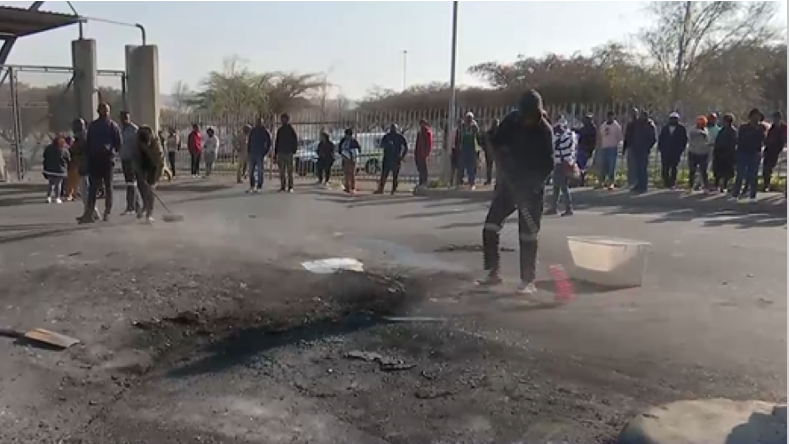
JOHANNESBURG — The family of 27-year-old Mthokozisi Mvelase, an e-hailing driver from Soweto, is appealing to the public for assistance in giving their loved one a dignified farewell following his brutal murder last week. The young man was shot and his vehicle set alight outside Maponya Mall on Wednesday night, in an incident that has sparked nationwide outrage and renewed concerns over the safety of e-hailing drivers in South Africa.
Mvelase’s tragic death has plunged his family into mourning and despair, not only from the shocking manner in which he was killed but also due to financial challenges in laying him to rest. Speaking to local media, family members described him as a humble, hardworking individual who had taken up e-hailing work to support his loved ones. Now, they are forced to confront an unexpected and heartbreaking reality: the violent loss of their son, and the inability to afford a proper burial.
A Community in Mourning
In the hours following the killing, Soweto residents took to the streets in protest. Furious over the senseless violence, they blocked roads around Maponya Mall, leading to its temporary closure. The protestors demanded justice, not just for Mvelase, but for the growing number of e-hailing drivers who have become targets of violence in what appears to be an escalating turf war with elements of the taxi industry.
“This is not just about one man,” said a community leader during the protest. “We are tired of burying our brothers and sons who are simply trying to earn a living.”
Ongoing Tensions Between Taxi Operators and E-Hailing Drivers
Though the full details surrounding Mvelase’s killing are still under investigation, early reports suggest the incident may be tied to the long-standing and often volatile tensions between traditional minibus taxi operators and app-based e-hailing services such as Uber and Bolt.
Over the past few years, several violent confrontations have been reported across the country. These altercations frequently involve claims that e-hailing drivers are “stealing business” from taxi operators, often resulting in threats, intimidation, and in extreme cases murder.
The government has made several attempts to mediate between the two sectors, but regulatory gaps and enforcement challenges have left e-hailing drivers exposed and vulnerable. Drivers have consistently called for better protection, and the tragic killing of Mvelase only amplifies those calls.
An Industry at Risk
The e-hailing industry in South Africa has grown significantly in recent years, offering job opportunities to thousands of unemployed youth. For many like Mvelase, it provides a lifeline a means to earn an income in an economy with staggeringly high unemployment rates, particularly among young people.
Yet the industry is increasingly becoming synonymous with danger. E-hailing drivers often work in isolation, making them easy targets for hijackings, robberies, and violent attacks. In some areas, drivers report being too afraid to operate, especially at night.
Mvelase’s murder is not an isolated case. Rather, it joins a growing list of similar incidents, each one more disturbing than the last, and each one reinforcing the urgent need for reforms and protective measures.
Plea for Support
As the police continue their investigation, Mvelase’s grieving family is left to deal with the emotional and financial aftermath. They have issued a public plea for help to cover the costs of his funeral, expressing hope that the community and the country at large will stand in solidarity with them in this painful time.
Community members and local NGOs have begun mobilizing efforts to raise funds, while public calls for justice and stronger industry protections continue to mount.
“This cannot be the new normal,” said one Soweto resident during a vigil for Mvelase. “Our brothers go out to work, and we don’t know if they will come back. Something must be done.”
The Road Ahead
Mvelase’s death has once again thrust the safety of e-hailing drivers into the national spotlight. As the country mourns another life lost too soon, there are growing demands on the government, law enforcement agencies, and industry stakeholders to urgently address the violence plaguing this sector.
While his family prepares to say their final goodbyes, the broader South African public is left with lingering questions: How many more must die before meaningful change occurs? And who will be held accountable?
Until these questions are answered, and until real solutions are implemented, the story of Mthokozisi Mvelase will remain not just a personal tragedy, but a national indictment of a broken system.
About the Author