Repo Rate Unchanged as SARB Warns of Inflation Risks
 Viable News Team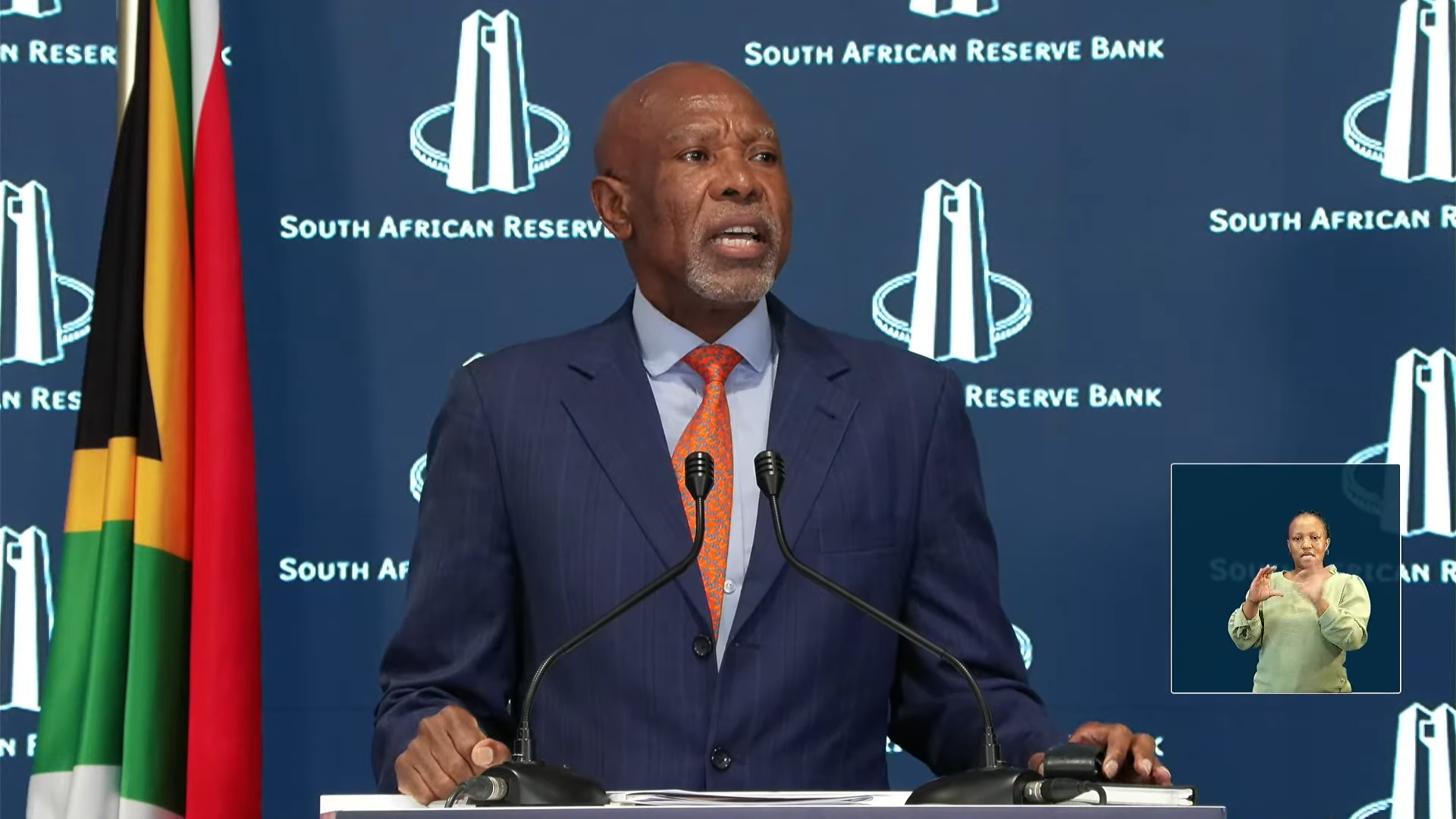
Image: Screenshot/youtube.com/@SAReserveBank
The South African Reserve Bank (SARB) has opted to keep its repo rate unchanged at 6.75%, as policymakers weigh rising global uncertainty linked to the escalating conflict in the Middle East and its potential impact on inflation and economic growth.
Announcing the decision in Pretoria, Governor Lesetja Kganyago said the Monetary Policy Committee (MPC) reached a unanimous decision to hold rates steady, noting that central banks globally are taking a cautious approach while assessing the evolving situation. He emphasised that the current geopolitical tensions represent a classic supply shock a scenario where prices rise while economic demand weakens.

Kganyago explained that while initial price increases, such as higher fuel costs, cannot be directly controlled through interest rates, the SARB remains alert to so-called “second-round effects,” where these increases spread more broadly across the economy. The central bank’s priority, he said, is to ensure that inflationary pressures remain temporary rather than becoming entrenched.
South Africa’s inflation rate currently sits at around 3%, comfortably within the SARB’s target range of 3% to 6%. However, the outlook is becoming more uncertain. The central bank expects inflation to climb toward 4% in the near term, largely driven by rising energy prices. Fuel inflation alone could exceed 18% in the second quarter, placing additional strain on households and businesses.
On the growth front, the economy showed modest improvement in 2025, expanding by 1.1% for the year. While this marks progress compared to previous years, it remains below long-term averages. The SARB noted encouraging signs such as improved investor confidence and increased activity, but warned that global instability could disrupt this fragile recovery.

To prepare for uncertainty, the bank outlined alternative scenarios. In a moderate case, where the Middle East conflict persists for a few months, oil prices could approach $100 per barrel, with the rand weakening slightly. Under this scenario, inflation could exceed 4%, potentially requiring a modest interest rate hike later in the year. In a more severe scenario, where the conflict drags on for over a year, inflation could rise above 5%, possibly forcing multiple rate increases and slowing economic growth further.
Despite these risks, the SARB highlighted recent progress in stabilising South Africa’s macroeconomic environment, including improved fiscal conditions and a more stable inflation outlook. The bank expects inflation to eventually ease back toward 3% over the medium term, assuming global pressures subside.
The decision to hold rates reflects a balancing act between supporting economic recovery and containing inflation risks. For now, policymakers appear to be taking a wait-and-see approach, closely monitoring global developments before making further adjustments.
About the Author