‘’No Smoke Without Fire’: MK Party MP David Skosana Says SAPS Testimony Exposes Deep Contradictions in Security Cluster”
 Viable News Team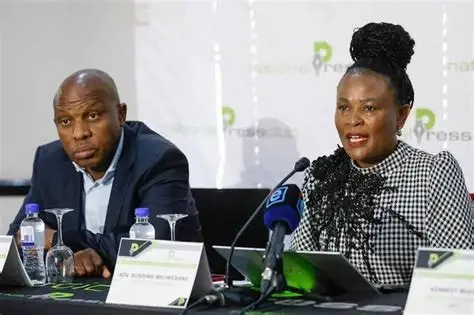
uMkhonto weSizwe (MK) Party MP David Skosana has intensified calls for accountability within South Africa’s security cluster, saying the testimony coming out of Parliament’s Ad Hoc Committee reveals a troubling web of contradictions at the highest levels of policing. Speaking on Tuesday during the committee’s latest session, Skosana said the allegations raised by David Skosana and KwaZulu-Natal Provincial Commissioner Nhlanhla Mkhwanazi make it clear that “there is no smoke without fire.”

Skosana’s comments followed the appearance of National Police Commissioner Fannie Masemola before the Ad Hoc Committee, where he reiterated his earlier stance on the disbandment of the Political Killings Task Team (PKTT). According to Masemola, suspended police minister Senzo Mchunu acted outside his authority by dissolving the specialised unit tasked with investigating politically motivated murders in KwaZulu-Natal.
Masemola: Mkhwanazi Was Allowed to Brief, Not Present Findings
Masemola defended his prior interactions with Mkhwanazi, telling MPs that he had approved the provincial commissioner’s request to brief the public on the PKTT’s work but not to present his own independent findings.
“Remember, I said he asked to go and brief on the work of the PKTT, and I said yes, proceed on that, but not on my report,” Masemola told the committee.
This distinction has become central to ongoing debates about alleged interference and contradictions in SAPS leadership structures.
Skosana: ‘Too Many Contradictions to Ignore’
After questioning Masemola, Skosana said the testimonies coming from SAPS top brass raise red flags that Parliament cannot overlook.

“In my view, there are a lot of things that contradict each other,” he said. “When you listen to other generals the former deputy national commissioner Francinah Vuma and others what they are telling us also shows we must get to the truth.”
Skosana emphasised that every story has another side, and Parliament must carefully weigh each version presented. He said Mkhwanazi’s testimony about political interference in the security cluster echoed long-standing concerns across justice, policing, and correctional services.
“There are underlying problems that have engulfed the country in terms of our safety,” he warned. “We need to get to the bottom of them. There should be consequence management, and people must be prosecuted.”
Although many of the claims remain allegations, Skosana insisted they cannot be brushed aside. “These allegations have to be tested,” he said.
KZN Commissioner Returns for Final Testimony
The Ad Hoc Committee will reconvene on Wednesday, with Mkhwanazi returning as the final witness. His appearance coincides with news that his contract has been renewed for another five-year term a move widely interpreted as a vote of confidence in his leadership.
Skosana praised Mkhwanazi’s courage in speaking out.
“He has done the country proud,” he said. “If you listen to what is happening here and at the Madlanga Commission, there will be consequences once they give the report to the president.”
However, Skosana stressed that whether the executive acts on those findings remains “another story entirely.”
‘There Is Something Deeply Wrong in the Country’
Skosana painted a picture of a country whose safety and justice systems are strained by interference and mismanagement. For him, the contradictions aired in Parliament are not isolated issues but signs of a wider institutional breakdown.
“There are people who are in charge but who are not in offices,” he said. “There’s no smoke without fire obviously, something is wrong in the country, and it has to be reset.”
He urged a complete overhaul of policing and the justice system.
‘Fix the Judiciary or We Are Wasting Time’
While much of the committee’s work has focused on SAPS, Skosana raised a significant concern: the judiciary’s role in weakening accountability.
“Though I’m not happy with the judicial system we didn’t touch much on that we need to dig deeper,” he said. He suggested the establishment of another joint committee next year to deal specifically with judicial matters.

“If we don’t fix our judiciary, we are wasting time with the police,” he said. “Police will arrest people, and at the end of the day, those people will be out of jail within no time. We need to make sure the SAPS and judiciary are strong.”
A Country Waiting for Answers
As the Ad Hoc Committee nears the end of its hearings, South Africans are watching closely to see whether Parliament can untangle the conflicting testimonies and identify where the truth lies. For Skosana, the revelations so far paint a troubling portrait of interference, dysfunction, and unspoken political power.
But he remains hopeful that the process and the courage of officials like Mkhwanazi will lead to accountability.
“Indeed, it’s been a revelation,” he said. “We must reset this country.”
About the Author