‘Void From the Start’: Former RAF CEO Collins Letsoalo Rejects SCOPA Summons as Parliament Moves Toward Criminal Charges
 Viable News Team
IMAGE: SUPPLIED
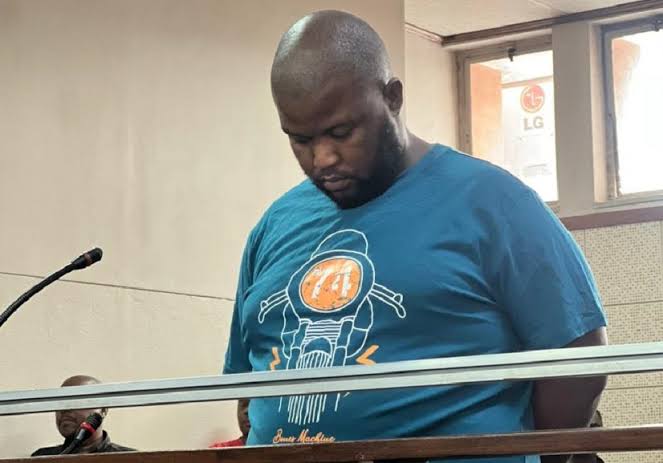
Former Road Accident Fund (RAF) CEO Collins Letsoalo has once again refused to appear before the Standing Committee on Public Accounts (SCOPA), doubling down on his claim that the committee’s inquiry into the RAF is “unlawful” and insisting that he will not participate in what he calls a fundamentally flawed process.
In an interview with SABC News on Tuesday, a defiant Letsoalo dismissed the committee’s attempts to summon him, sharply criticising both the procedure and SCOPA chairperson Songezo Zibi.
“I am not going to go to an unlawful process,” Letsoalo said.
“The reality is this: I’ve never received a summons, by the way. My lawyers have asked for those summonses.”
His refusal marks the latest escalation in a tense standoff between Parliament and the former CEO, whose leadership at the RAF remains under intense scrutiny.
A Battle Over Process and Over Principle
At the heart of the dispute is Letsoalo’s argument that SCOPA acted illegally by not serving the summons directly on his legal team.
“It’s not for me. It’s for them to serve, not me,” he said.
“I’ve said my lawyers are there. Why don’t they serve them there? These are not summonses.”
When pressed on whether the failure to physically serve him stemmed from confusion over his addresses, Letsoalo brushed off the issue.
“Which three are different?” he asked. “I know about two. If they say they’ve gone to both addresses, that’s fine.”
Regarding the RAF address, he was blunt: “I don’t work for the RAF. Who says I still stay there?”
He insisted repeatedly that the summons should have been sent to his lawyers directly.
“My lawyers are there. They are saying: serve them on us. The reality is this.”
Parliament Pushes Back
SCOPA has strongly disputed Letsoalo’s claims.
The committee confirmed earlier this month that it had summoned him to appear on November 25 and 26 as part of its oversight inquiry into the RAF an inquiry backed, they argue, by clear legal authority.
When attempts to deliver the summons at all known residential addresses failed, Parliament authorised substituted service, allowing the summons to be:
- sent via email,
- delivered via social media, and
- affixed to the door of his residence.
Parliamentary legal advisors maintain that this procedure is lawful and explicitly allowed under the Powers, Privileges and Immunities of Parliament and Provincial Legislatures Act the same Act that empowers Parliament to compel individuals to testify and produce documents.
Failure to comply without valid cause constitutes a criminal offence and may amount to contempt of Parliament.
Letsoalo Dismisses Threat of Criminal Charges
Asked whether he fears being charged for failing to appear, Letsoalo was unmoved.
“Let him go,” he said, referring to Zibi.
“The fact that he’s opened a case does not mean there is a criminal charge. What criminal charge are you talking about? I’ve not even received summonses.”
This defiant posture has only intensified the confrontation between Letsoalo and SCOPA.
On Tuesday, Letsoalo’s attorneys escalated matters by issuing a cease-and-desist letter, arguing that SCOPA lacks the legal authority to conduct any inquiry related to the RAF.
Parliament rejects that argument outright.
A Looming Test Case for Public Accountability
SCOPA’s recommendation to pursue criminal charges now sits with the Speaker of the National Assembly. Should the Speaker endorse it, the matter will move into the criminal justice system setting the stage for a potentially precedent-setting clash.
The case now sits at a crossroads, carrying major implications for how far Parliament can go in enforcing compliance, particularly when it comes to senior officials who have previously led powerful public entities.
Legal experts note that the outcome could redefine expectations for public sector accountability and possibly expose loopholes that allow high-ranking executives to evade parliamentary oversight.
A Conflict That Signals Larger Tensions
Behind the technical legal arguments lies a deeper tension one about governance, transparency, and the ability of Parliament to hold public institutions and their leaders accountable.
For many observers, Letsoalo’s stance signals a growing boldness among individuals resisting parliamentary oversight.
For SCOPA, the moment feels pivotal: a test of its authority, its mandate, and its ability to ensure that public funds and public institutions are scrutinized without obstruction.
For Letsoalo, the battle appears framed as one of principle a rejection of what he repeatedly calls an invalid, “void from the start” process.
About the Author