Zille Challenges Ramaphosa to ‘Tell the Truth’ on MTN Links Amid Corruption Probe
 Viable News Team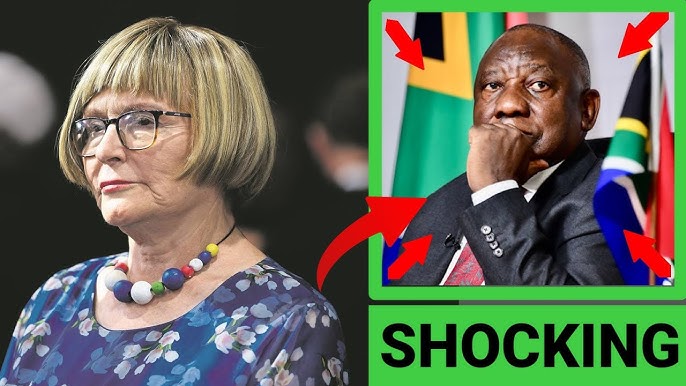
Johannesburg – South Africa’s international relations are once again under a cloud of political controversy, as Democratic Alliance (DA) Federal Council Chairperson Helen Zille has called on President Cyril Ramaphosa to come clean about his past ties to MTN.

Her remarks, delivered in a pointed social media exchange, follow fresh reports that the United States Department of Justice (DOJ) is investigating MTN over allegations of bribery and corruption in its operations abroad.
For Zille, the matter is not just about MTN it is about whether South Africa’s head of state has fully disclosed his role in a corporate saga that spans decades and continents.
Ramaphosa’s Corporate Past
Before entering the highest office in the land, Ramaphosa was a prominent businessman. From 2001 to 2013, he served as chairperson of MTN, Africa’s largest mobile operator. During this time, MTN expanded aggressively into international markets, including Iran and Afghanistan.
It was also during this period that allegations of bribery first surfaced. Reports suggested that MTN may have secured licenses and contracts in these countries through questionable means, prompting investigations in several jurisdictions. While no direct evidence has tied Ramaphosa personally to wrongdoing, his leadership role at the company makes him a figure of interest whenever MTN faces corruption probes.

Zille’s Challenge
The controversy erupted after President Ramaphosa used his official X (formerly Twitter) account to post a message about South Africa’s independent approach to international relations. In his weekly newsletter, he reinforced the point, writing:
“South Africa’s national interest will always remain independent. We will not be beholden to external influence. As we continue to engage constructively with the international community, we have been consistent that this should always be on the basis of mutual respect.”
Zille seized on this, firing back with a sharp retort:
“Not even subject to the interests of MTN and its chairpersons past and present??? Really? Tell us the truth now.”
Her comments were a direct jab at Ramaphosa’s past corporate affiliations, suggesting that he cannot credibly claim independence in foreign affairs without addressing the allegations linked to MTN’s operations under his watch.

The Bigger Picture: International Relations Under Scrutiny
The timing of Zille’s comments is significant. They came just days after Ramaphosa attended the ninth Tokyo International Conference on African Development (TICAD) in Japan, where he lauded Japan as a vital trading partner in technology, agriculture, construction, and manufacturing.
At the summit, Ramaphosa emphasized South Africa’s commitment to balanced diplomacy:
“South Africa will continue to engage with partners in both the Global North and Global South. Our approach is neither partisan nor beholden, but strategic.”
Yet, the MTN allegations threaten to muddy this message. If South Africa’s president is seen as compromised by past corporate links, critics argue, it could undermine the credibility of his calls for principled, independent diplomacy.

MTN in the Dock
MTN has long been one of Africa’s corporate success stories, but its global ventures have frequently been dogged by allegations of corruption. The latest probe by the U.S. DOJ focuses on claims of bribery in Iran and Afghanistan countries where doing business often means navigating complex, high-risk political environments.
The company has consistently denied wrongdoing, stating that it complies with international laws and ethical standards. Still, the cloud of suspicion persists, particularly as investigations drag on.
For South Africans, the issue hits close to home, given MTN’s prominence in the economy and Ramaphosa’s former role at the company.
A Political Football
Analysts say Zille’s attack is part of a broader political strategy. With the DA eager to portray Ramaphosa and the ANC as tainted by corruption, the MTN saga offers fertile ground. It allows the opposition to draw connections between corporate scandals, state corruption, and questions of ethical leadership at the very top.
For Ramaphosa, who has long styled himself as a reformer committed to transparency and clean governance, the challenge is delicate. Addressing his MTN past head-on could expose him to uncomfortable questions, but remaining silent risks feeding suspicions that he has something to hide.
Public Trust and Political Stakes
South Africa’s citizens are no strangers to corruption scandals, from state capture to municipal tender fraud. In this context, any suggestion of impropriety linked to the president even indirectly can erode public trust.
The question now is whether Ramaphosa will respond directly to Zille’s challenge. His political opponents will continue to press him, while supporters may argue that his MTN tenure ended years ago and that he has not been implicated in wrongdoing.
Still, as the DOJ probe unfolds, the shadow of MTN is likely to loom over Ramaphosa’s presidency, at least in the court of public opinion.
Conclusion
Helen Zille’s call for Ramaphosa to “tell the truth” about his MTN links has reignited debate about the intersection of politics, business, and accountability in South Africa. At stake is not just the president’s credibility, but the country’s image on the global stage.
As MTN faces another round of international scrutiny, the question remains: will Ramaphosa confront his past at the telecom giant head-on, or will silence only deepen the doubts?
About the Author