Turning Back Progress: Why the DA Is Sounding the Alarm on New SETA Appointments
 Viable News Team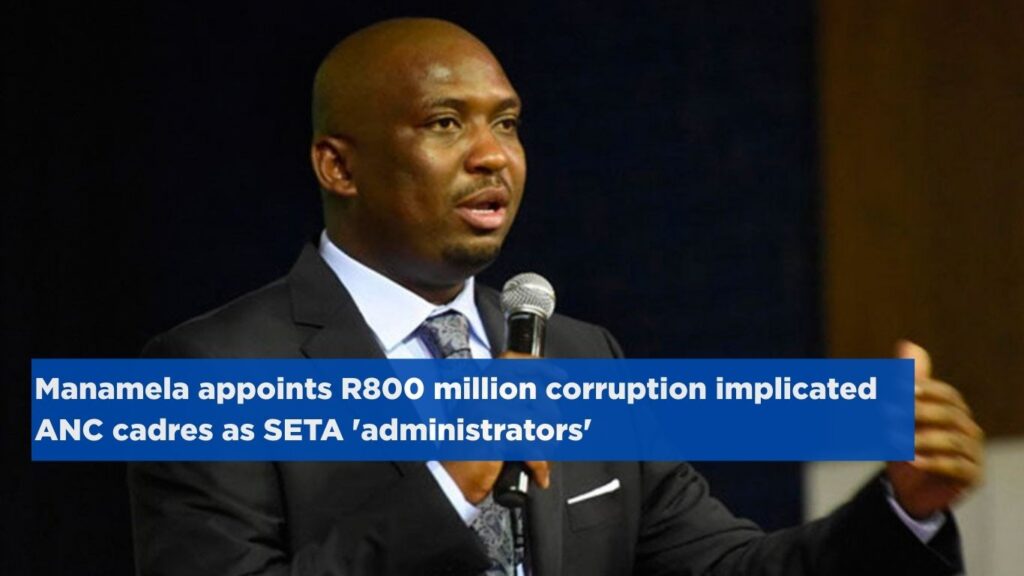
South Africa’s economy stands at a precarious crossroads. With unemployment persistently high and youth skills development more urgent than ever, the entities tasked with equipping the nation’s workforce the Sector Education and Training Authorities (SETAs) should be beacons of integrity, innovation, and good governance. Yet, a recent decision by Minister Buti Manamela has sparked deep concern and calls for accountability.
In what is being described by critics as a political miscalculation with long-term implications, the Minister announced the appointment of three individuals as administrators to oversee three critical SETAs: the Construction SETA (CETA), the Services SETA, and the Local Government SETA (LGSETA). But rather than inspiring confidence, these appointments have been met with resistance, particularly from the Democratic Alliance (DA), who view the move as yet another chapter in the deeply entrenched problem of political deployment and administrative recycling.
A Pattern of Failure, Not Fresh Leadership
The reaction from the DA has been swift and unequivocal. In an urgent appeal addressed directly to Minister Manamela, the party has requested the immediate reversal of these appointments. Their message is clear: South Africa cannot afford to have individuals with questionable track records at the helm of institutions critical to solving the country’s dire skills gap.
The individuals selected are not new to public service nor to controversy. Each has previously held positions within various spheres of government, but their legacies are anything but commendable. While details around their conduct are publicly available, critics argue that their professional histories reflect not only underperformance, but in some cases, serious lapses in accountability and stewardship.
What concerns the DA and civil society observers isn’t merely political affiliation, but the alarming continuity of appointing individuals under clouds of suspicion to positions that demand clarity, integrity, and effectiveness. The country has seen the consequences of recycled leadership: institutions that are hollowed out, budgets that disappear without impact, and communities that remain underserved.
Systemic Erosion Under the Guise of Reform
Minister Manamela framed the appointments as a strategic intervention aimed at restoring stability and credibility to these SETAs, citing deep-rooted issues such as oversight failure and procurement anomalies. Ironically, critics argue, the very individuals tasked with fixing the problem are part of the systemic failure in the first place.
This contradiction is at the heart of the outrage. It speaks to a broader issue plaguing public administration in South Africa cadre deployment. The practice of positioning party loyalists in strategic government and public sector roles has long been criticized for undermining meritocracy, weakening governance, and perpetuating a culture of impunity.
The DA has, for years, been a vocal opponent of cadre deployment, warning that it transforms public institutions into vehicles for political patronage rather than engines of development. For a country in urgent need of skills, jobs, and trust in public institutions, this governance model is not only outdated—it is dangerous.
A Test of Leadership—and of Political Will
For Minister Manamela, this moment is more than an administrative decision it is a test of leadership and accountability. The DA has asked: Will he uphold the values of transparent governance, or will he follow a path well-trodden by those who placed political allegiance above the national interest?
It is not the first time that questions have been raised about politically appointed administrators in failing institutions. Nor is it the first time communities and stakeholders have been told that change is coming, only to be handed more of the same. What’s different now is the level of scrutiny. Civil society, opposition parties, and ordinary citizens are increasingly unwilling to accept empty promises or excuse managerial malpractice.
Rebuilding Trust, Rebuilding SETAs
The DA’s call is simple: remove the political baggage from the SETA system. Appoint independent professionals, with no history of corruption or mismanagement, to lead the transformation these bodies so desperately need. That transformation cannot be delivered by individuals with checkered pasts or political debts to pay. It requires fresh eyes, clean hands, and a real understanding of the developmental mandate.
Skills development in South Africa cannot afford to be another casualty of factionalism and recycled incompetence. The SETAs are not playgrounds for political reassignments they are critical instruments in shaping the country’s economic future. Every rand wasted through poor leadership is a missed opportunity to train a young person, develop a trade, or place someone in meaningful employment.
The Bigger Picture
This issue goes far beyond three appointments. It represents a microcosm of the broader challenge facing public institutions in South Africa. If public outrage, parliamentary pressure, and watchdog scrutiny are not enough to provoke change now, what will it take?
Minister Manamela still has the opportunity to demonstrate that accountability is more than a talking point. Reversing these appointments would send a powerful message that political loyalty will not be rewarded at the expense of national progress, and that South Africans deserve leaders who are worthy of the trust and responsibility they are given.
As the DA and others wait for a response, the question lingers: Will this be a moment of reform—or just another page in the growing book of missed chances?
About the Author