B R Hlambela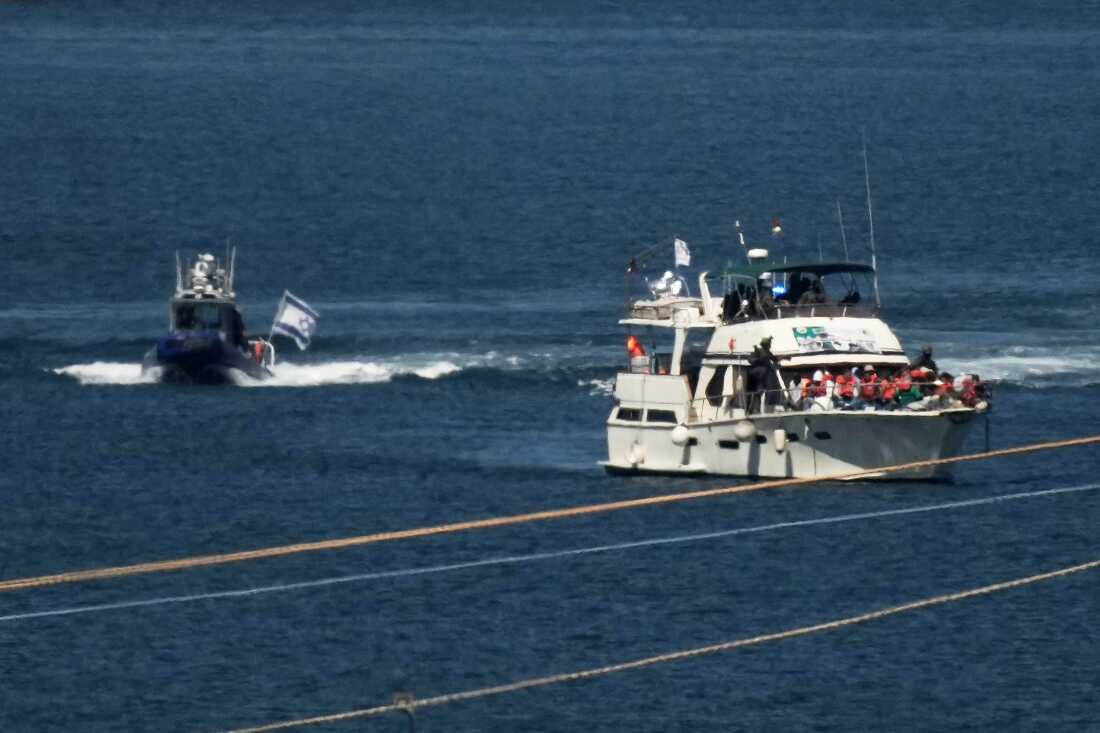
Activists in orange life jackets sit aboard a Gaza-bound Sumud flotilla boat as Israeli navy soldiers sail it into the port of Ashdod, Israel, Thursday, Oct. 2, 2025, after it was intercepted while approaching the Gaza coast. (AP Photo/Leo Correa)
In the midst of ongoing devastation in Gaza, the Global Sumud Flotilla has become one of the most visible symbols of international civil society’s challenge to the Israeli naval blockade.
Comprised of dozens of civilian vessels carrying activists, supplies, observers, and solidarity delegations, the flotilla seeks to deliver humanitarian aid and press for unhindered access to Gaza.
But recent events interceptions, arrests, and legal controversy have sharpened debates over international law, human rights, and the effectiveness of activism by sea.
The Global Sumud Flotilla (GSF) is a multi organization initiative launched in mid 2025.
It is organized by several civil society coalitions including the Freedom Flotilla Coalition, Global Movement to Gaza, Maghreb Sumud Flotilla, and Sumud Nusantara.
The stated mission to break the maritime blockade of Gaza, deliver humanitarian aid, create a people led route of support, and raise international awareness of the humanitarian crisis.
On October 3, 2025, Israeli naval forces intercepted the final vessel of the flotilla, Marinette, about 42.5 nautical miles from Gaza.
This followed the earlier interception of dozens of other vessels in the flotilla.
Overall, over 450 activists have been detained in connection with the flotilla.
Among the detainees are activists, parliamentarians, journalists, doctors, and high profile figures, including Greta Thunberg.

Image credit to NDR
Israel’s government asserts the flotilla violated its naval blockade and that the vessels were in an active combat zone.
It claims that aid could have been delivered through more conventional, safer channels.
Meanwhile, international responses have included protests, diplomatic condemnations, calls for release of detainees, and demands to respect international law.
South Africa, among many others, has urged Israel to release its citizens detained from the flotilla.
The idea of aid flotillas is not new.
The Gaza Freedom Flotilla in 2010 including the Mavi Marmara was one of the highest profile attempts.
That mission resulted in confrontation and deaths, raising widespread controversy and international attention to the blockade.
Other flotillas in 2011, 2015, 2018 similarly tried to challenge the maritime aspects of the blockade, often getting intercepted, detained, or prevented from reaching Gaza.
One major point of contention is whether the maritime blockade imposed by Israel on Gaza is lawful under international humanitarian law.
Critics argue that by restricting access to basic necessities food, medicine, water it violates obligations under the Geneva Conventions.
The flotilla organizers often cite rulings from the International Court of Justice ICJ, including provisional measures requiring Israel to take steps to enable humanitarian aid into Gaza.
Some governments condemn such actions as violating the rights of vessels flagged by other nations.
Critics and some governments argue that aid delivery through standard channels land crossings, un trucks, etc. may be more efficient and safer.
There are also accusations that some flotilla missions carry minimal supplies and rely heavily on symbolic value.
Supporters counter that symbolic acts are necessary to break silence, galvanize international pressure, and force changes in policy.
Risk to participants detainees face legal uncertainty, possible deportation, and in some cases dangerous confrontations.
Some flotilla vessels reportedly faced drone harassment, explosions, or other hostile actions while at sea.
South Africa have strongly condemned the interception and called for the release of detained nationals.
Civil society, activist networks, and many human rights organizations have condemned what they view as a violation of fundamental rights and an impediment to humanitarian relief.
The blockade of Gaza has been repeatedly linked with large scale humanitarian suffering including shortages of medical supplies, food insecurity, and constrained infrastructure.
The flotilla efforts aim to spotlight and mitigate those crises.
The legal precedents set by flotillas and the responses by Israel and others may influence future norms around naval blockades, maritime humanitarian action, and the rights of non state actor participation in aid efforts.
For many participants and supporters, it is not just about aid it’s about human dignity, visibility, and breaking what they perceive to be unjust restrictions.
There are ongoing diplomatic efforts from governments calling for the release of detainees and safe humanitarian access.
Increased international pressure legal, political, media may force changes in policy regarding how aid is delivered to Gaza.
The Gaza aid flotilla especially the Global Sumud mission stands at the intersection of humanitarian crisis, international law, and political symbolism.
Its successes and failures alike are shaping how the world perceives the Israeli blockade, the rights of civilians under siege, and the limits of activism by sea.
Navigating these waters literally and figuratively requires balancing moral urgency with strategic planning, legal clarity, and international solidarity.
About the Author


 Viable News Team