South Africa Raises Alarm as Sudan’s War Deepens Humanitarian Catastrophe
 Viable News Team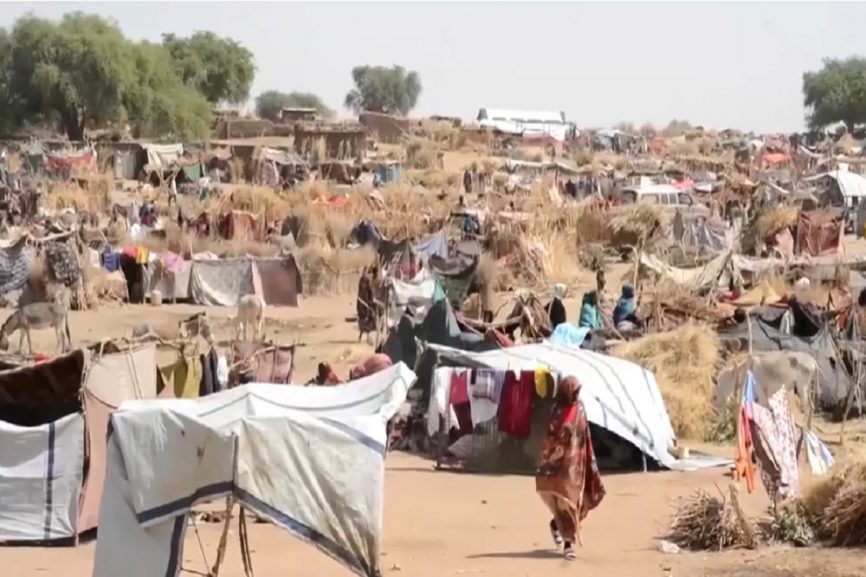
The South African government has voiced deep concern over the escalating violence in Sudan, where a prolonged war between the Sudanese Armed Forces (SAF) and the paramilitary Rapid Support Forces (RSF) has plunged the nation into unprecedented chaos.

In a strongly worded statement, Pretoria condemned the latest wave of attacks in El Fasher, the capital of North Darfur, calling it another brutal example of the atrocities Sudanese civilians have been forced to endure.
Chrispin Phiri, spokesperson for the Minister of International Relations, said South Africa stood in solidarity with the people of Sudan, particularly women and children who bear the heaviest burden of the conflict.
“South Africa reiterates its call for the immediate end to the conflict and the resumption of sincere and genuine talks to bring an end to the conflict,” Phiri said.

A Nation Divided: Emergence of a Parallel Government
The war, now in its 28th month, has morphed into a struggle not only for territory but also for legitimacy. In a dramatic development, Mohamed Hamdan Dagalo widely known as Hemedti was sworn in this week as the head of a parallel Sudanese government in the city of Nyala.
Nyala, one of Sudan’s largest cities and the de facto capital for RSF-controlled Darfur, has become the symbolic seat of the paramilitary force’s authority. The RSF has established a prime minister and presidential council, effectively setting up a rival state within Sudan.
Dagalo’s swearing-in, though not independently verified, pushes the country closer to de facto partition, analysts warn. While RSF claims civilian support, reports from the ground tell a different story: hunger, fear, and the slow suffocation of besieged populations.
Civilians Under Siege
For more than 500 days, hundreds of thousands of civilians in El Fasher have been trapped in what aid workers describe as a “city under siege.” Many have resorted to eating animal feed to survive.
The RSF insists civilians were given opportunities to leave, but humanitarian watchdogs challenge that claim. The Yale Humanitarian Lab released satellite imagery suggesting RSF forces have built barriers to prevent people from escaping. Those who did manage to flee report violent robberies and assaults by paramilitary soldiers.

The scale of suffering is staggering. UNICEF reported this week that more than 1,000 children have been killed or maimed in the war by airstrikes, artillery, and ground attacks.
Drone attacks on Nyala on Saturday underscored the dangers faced by civilians even in RSF strongholds. Across Darfur, villages continue to be targeted, displacing thousands more into already overstretched refugee camps.
Shifting Frontlines, Shattered Lives
While RSF holds most of Darfur, the national army has clawed back control of central and eastern Sudan. The SAF recently convened its first cabinet meeting since the war began, a sign it intends to reassert authority.
But fighting remains intense in the vast Kordofan region, where small villages have endured relentless raids and scorched-earth tactics.
The war’s toll is catastrophic. Half of Sudan’s 45 million people face acute hunger. Infrastructure has collapsed, with widespread power and water outages compounding the misery. Once-vibrant urban economies have been reduced to rubble, and inflation has made basic goods unaffordable for most families.
A World’s Worst Humanitarian Crisis
The United Nations has described Sudan as the site of the world’s worst humanitarian disaster today. Yet, international mediation efforts have faltered.

Although Washington has pledged to help end the conflict, little tangible progress has been made. Regional mediators, including the African Union, have struggled to bring the two sides to the negotiating table.
Meanwhile, humanitarian groups warn that without immediate intervention, famine-like conditions could soon become widespread. “The situation is deteriorating faster than aid can reach those in need,” one aid worker said. “We are witnessing an unfolding catastrophe in real time.”
South Africa’s Call for Peace
South Africa, with its history of negotiated settlement, insists dialogue remains the only way out of the quagmire. Pretoria has previously offered to support African-led mediation efforts, arguing that the conflict’s spillover risks destabilizing the broader region.
“Only genuine political will can end this war,” Phiri emphasized. “It is not just Sudanese lives at stake, but the stability of the entire African continent.”
For millions of Sudanese trapped between warring factions, however, peace feels distant. Every new front line drawn, every drone strike launched, and every child lost deepens the scars of a conflict that has already hollowed out a nation.

As one displaced mother in El Fasher reportedly told aid workers, “We are not living anymore. We are only surviving.”
About the Author