Ramaphosa and Trump in Talks as U.S. Tariffs Hit South African Exports
 Viable News Team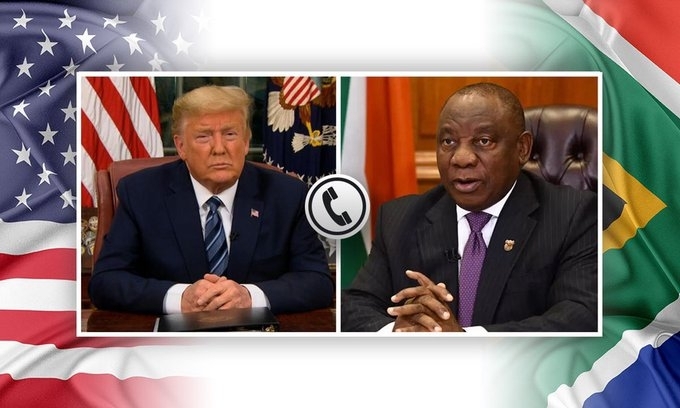
JOHANNESBURG – In a last-minute effort to protect South Africa’s economic interests, President Cyril Ramaphosa placed a direct call to U.S. President Donald Trump this week, just hours before the United States implemented steep 30% tariffs on South African exports. The conversation, described as focused and diplomatic, came amid mounting concern that the new trade barriers could have devastating consequences for key sectors of the South African economy.
The Office of the Presidency confirmed on Thursday that the call between the two leaders took place on Wednesday morning and centered on bilateral trade relations and South Africa’s ongoing efforts to avoid the damaging tariffs. According to a formal statement, the two presidents agreed to continue engaging on trade matters, acknowledging the broader landscape of complex negotiations the U.S. is currently undertaking with several international partners.
Although the discussion did not result in an immediate resolution or exemption, the South African government framed the engagement as a positive step in an otherwise tense trade climate. Ramaphosa’s administration emphasized that the conversation was part of a broader diplomatic push to secure fair treatment for South African exports, and to shield the country’s economy from measures that could cost tens of thousands of jobs.
“The two leaders undertook to continue with further engagements, recognising the various trade negotiations the U.S. is currently involved in,” the Presidency stated. “Respective trade negotiating teams will take forward more detailed discussions.”
Separate communication from the Ministry of the Presidency added that President Ramaphosa’s call to Trump formed part of South Africa’s strategy to bolster its trade negotiation efforts and ensure that the U.S. administration understood the potential impact of the tariffs on an already struggling South African economy.
South Africa has spent months attempting to negotiate exemptions or concessions before the U.S.-imposed deadline, but those efforts have ultimately failed to stop the tariffs from taking effect. As of Thursday, South African imports to the United States are now subject to a 30% duty the highest applied to any sub-Saharan African country under the new trade regime. The United States is South Africa’s second-largest trade partner after China, making the stakes in this negotiation particularly high.
The new tariffs are expected to strike a significant blow to several key export sectors, notably agriculture, automotive manufacturing, and textiles industries that together support a vast number of jobs across the country. Government estimates suggest that as many as 30,000 jobs could be lost as a direct result of the tariff hike, further compounding the country’s economic woes amid high unemployment and slow GDP growth.
While a portion of South Africa’s exports will be spared around 35% this includes goods such as copper, semiconductors, pharmaceuticals, certain lumber products, and strategically important minerals. Nevertheless, the breadth of the tariff’s impact has sent alarm bells through industry associations, labor unions, and economic policy circles.
Ramaphosa’s office emphasized that the two countries’ trade negotiation teams will now pick up the conversation with the goal of reaching a more favorable outcome. However, there is no set timeline for these follow-up engagements, and it remains unclear whether the United States will reconsider its tariff stance in the short term.
The South African government now finds itself in a delicate balancing act continuing to engage constructively with Washington while managing domestic fallout from the new duties. At the same time, it must work to protect its trade relationship with one of its most critical economic partners, without appearing weak or ineffective on the global stage.
As diplomatic channels remain open and trade teams resume dialogue, the South African government is under increasing pressure to secure a reversal or reduction of the tariffs. Until then, thousands of workers and businesses across the country remain in limbo, facing the grim reality of a new era in trade relations with the United States.
About the Author