“Over 550 Illegal Miners Arrested in Massive Sheba Mine Operation”
 Viable News Team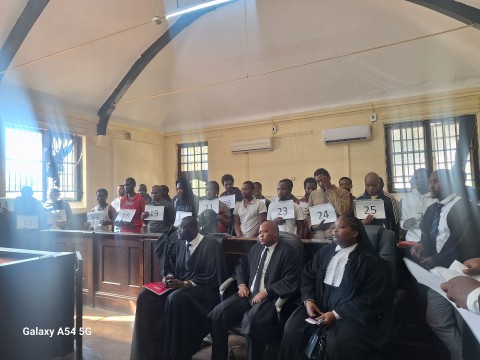
Image: SOURCE
A dramatic chapter is unfolding in South Africa’s mining heartland. In the hills of Mpumalanga, just outside Barberton, over 550 alleged illegal miners have now been arrested at the historic Sheba gold mine—a site that, until recently, quietly harboured one of the country’s largest underground networks of illicit mining.
On Tuesday, 28 more suspected zama-zamas, as illegal miners are colloquially known, emerged from the depths of the mine shafts, covered in dust and exhaustion. Their reappearance came days after a major police operation swept through the area. This recent group now joins the 518 individuals arrested last Friday, August 1, during the coordinated sting known as Operation Vala Mgodi—a crackdown specifically designed to target illegal mining operations in the region.
All eyes were on the Barberton Magistrate’s Court on Monday, August 4, where the first batch of detainees appeared to face charges of theft, trespassing, and violating South Africa’s immigration laws. A further 24 individuals are due in court again today, continuing what is expected to be a lengthy and complex legal process.
A Mine of Shadows and Survival
The Sheba mine, one of the oldest operating gold mines in the country, has long been a site of both economic activity and human desperation. Though formal operations still exist, its extensive network of tunnels and disused shafts has made it a magnet for zama-zamas, many of whom enter the labyrinthine underground world for days, weeks, or even months at a time in search of gold dust and rock.
For these miners many of whom are undocumented foreign nationals the risks are enormous: tunnel collapses, underground violence, toxic gases, and the constant threat of arrest. Yet the reward, even if meager by industry standards, is enough to lure thousands into the dark each year.
“I’d rather take my chances down there than starve up here,” said one man, speaking anonymously before being taken into custody. His sentiment echoes a growing reality in South Africa, where poverty and unemployment remain persistent, and where the formal mining sector has shed thousands of jobs in recent years.
A Coordinated Crackdown
Operation Vala Mgodi, initiated by South African Police Service (SAPS) and supported by other security agencies, marks one of the most high-profile raids on illegal mining activity in recent memory. The operation saw police cordon off large sections of the mine, using both surface and underground tactics to intercept and detain those inside.
Rumours quickly spread on social media and among activist groups that the miners had been starved into surrender by authorities claims that the police have flatly denied.
“There was no starvation tactic employed,” said SAPS spokesperson Colonel Thembeka Mbele. “We followed all legal procedures. This operation was about securing the mine and protecting lives—both of the miners and the surrounding community.”
Nonetheless, the spectacle of hundreds of weary miners emerging into daylight under armed guard has stirred uncomfortable memories of past crackdowns and reignited longstanding debates about how the country should handle the zama-zama phenomenon.
A Symptom of a Deeper Crisis
The National Union of Mineworkers (NUM) has responded to the arrests with concern not only for the individuals involved, but for what they say it represents. “This is not just a law enforcement issue,” said NUM spokesperson Livhuwani Mammburu. “This is a humanitarian crisis, an economic crisis, and a governance crisis rolled into one.”
According to NUM, the illegal mining surge is a symptom of systemic neglect. Many of South Africa’s disused or under-regulated mines lack sufficient security, rehabilitation, or oversight, leaving them wide open to exploitation. Add to that a backdrop of chronic unemployment, particularly among youth and migrant communities, and the result is an underground economy that is both dangerous and difficult to dismantle.
Estimates suggest that the illegal mining industry siphons billions of rands from the South African economy each year, while creating parallel networks of smuggling, corruption, and violence. Some zama-zamas reportedly work under the control of organized syndicates, while others operate in loosely affiliated groups—sharing tools, makeshift maps, and mining knowledge passed down by word of mouth.
The Road Ahead
As court proceedings move forward in Barberton, the country now finds itself at a crossroads. For some, the arrests are a sign that the government is finally getting tough on illegal mining and asserting control over a long-neglected issue. For others, it’s a temporary solution to a much deeper and more complicated problem.
Human rights organizations have called for more humane interventions, including pathways to legal employment and reintegration for illegal miners, many of whom are fleeing poverty or conflict in their home countries. Meanwhile, mining companies are demanding better security and stronger government partnerships to protect their operations.
For the community of Barberton, and for the miners whose lives now hang in the balance of the court system, there are no easy answers.
But one thing is certain: beneath the gold-rich soil of Mpumalanga, a battle continues—between survival and regulation, between economic desperation and legal enforcement, between the dark tunnels of the past and the uncertain light of the future.
About the Author