Justice Minister Announces Disciplinary Measures Over Madlanga Commission Delays
 Viable News Team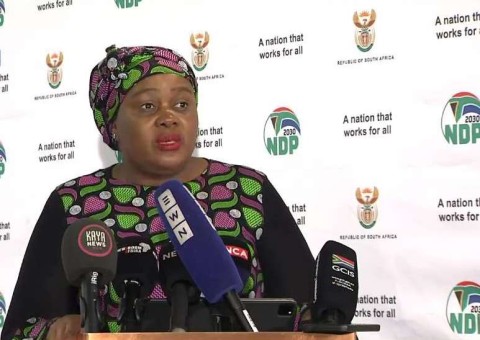
South Africa’s Justice Ministry has moved to take tough action against senior officials following fresh delays to the highly anticipated Madlanga Commission of Inquiry into criminality, political interference, and corruption in the criminal justice system.

At a media briefing on Tuesday, Justice Minister Mmamoloko Kubayi, flanked by Deputy Minister Andries Nel, confirmed that disciplinary measures would be instituted against two officials in the Department of Justice and Constitutional Development.
Among those facing action is the department’s Director-General, Doc Mashabane, while Deputy Director-General Jabu Hlatshwayo, who oversees ICT, has been immediately suspended.
Postponement of Hearings Sparks Concern
The announcement comes after the commission confirmed that its hearings would not begin as scheduled, citing administrative delays. A new date for proceedings will be announced once logistical issues have been resolved.
The postponement has caused frustration within government and among the public, given the commission’s mandate to probe allegations of corruption and interference in law enforcement issues that have long plagued the country’s justice system.
Minister Kubayi expressed her disappointment with the setback, noting that she had already submitted a full report to President Cyril Ramaphosa detailing the reasons for the delay.
“We must state that despite these challenges, the Madlanga Commission has commenced with the preliminary work that includes interactions with their witnesses,” Kubayi said, attempting to reassure the public that progress is still being made behind the scenes.
Disciplinary Action: A Show of Accountability
The suspension of Deputy Director-General Hlatshwayo is one of the most decisive steps yet in addressing internal failings. At the same time, the initiation of disciplinary proceedings against Director-General Mashabane signals the seriousness with which government views the delays.
Kubayi emphasized that accountability is a key principle of her ministry, stressing that leadership failures cannot be allowed to undermine a commission tasked with exposing corruption and restoring faith in the justice system.
A Critical Commission in a Turbulent Time
The Madlanga Commission, chaired by Justice Mbuyiseli Madlanga, was established to investigate allegations of deep-seated corruption, political interference, and criminality within South Africa’s criminal justice structures.
Its findings are expected to have far-reaching consequences for the South African Police Service (SAPS), the National Prosecuting Authority (NPA), and related agencies. The commission also comes at a time of heightened scrutiny of SAPS leadership, including recent controversies involving senior officials such as KZN Commissioner Nhlanhla Mkhwanazi and Deputy National Commissioner Shadrack Sibiya.
Analysts argue that any delay undermines public confidence and risks slowing momentum in addressing systemic corruption.
Looking Ahead
While the commission’s official hearings have yet to begin, its preliminary work continues, with witness engagements and background investigations already under way.
For now, all eyes are on the Justice Ministry’s handling of the disciplinary measures and the commission’s ability to regain momentum.
As Kubayi put it: “Accountability must be upheld, no matter the level of office. The work of the Madlanga Commission is too important to be delayed by avoidable setbacks.”
The coming weeks will reveal whether these decisive measures will restore confidence and ensure that the commission delivers on its crucial mandate.
About the Author