Game Over in Court: Sundowns Defeat Pitso Mosimane in R7.9 Million Legal Showdown
 Viable News Team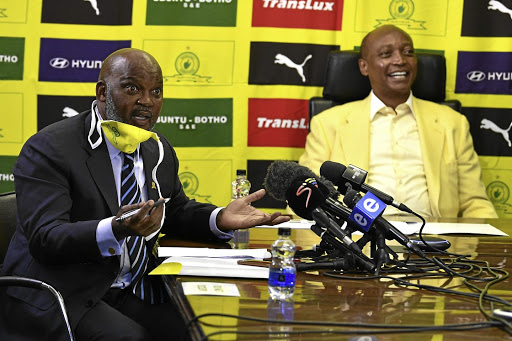
One of South African football’s most high-profile breakups has finally reached its dramatic conclusion not on the pitch, but in the courtroom. After years of legal wrangling, Mamelodi Sundowns have emerged victorious in a civil case against their former coach Pitso Mosimane and his agency MT Sports Marketing and Management, claiming back nearly R8 million in agent commission fees plus interest.
The South Gauteng High Court, under Judge Shaanaz Mia, ruled on 19 August 2025 that the defendants must repay R7,912,905 to the club, along with 7% interest per year from May 2021 until the debt is settled. The verdict ends a long and often bitter dispute rooted in Mosimane’s unexpected exit from the club in 2020 a move that shocked fans, altered African football dynamics, and now, years later, comes with a hefty financial price.
To understand how one of South Africa’s most decorated coaches ended up on the losing side of a courtroom battle with the very club he helped transform, we have to rewind the clock.
Pitso Mosimane is no ordinary coach. Under his leadership, Mamelodi Sundowns rose to continental dominance, claiming an historic CAF Champions League title in 2016 and no fewer than 11 major trophies. He was more than just a tactician he became the face of a winning era.
So when Mosimane signed a four-year contract extension in May 2020, it felt like a natural continuation of a golden partnership. The deal included an R8.6 million payment to his wife-run agency, MT Sports, as a 10% commission a common industry arrangement.
But in a move that would leave Sundowns blindsided, Mosimane resigned in September 2020 just four months later to join Egyptian giants Al Ahly.
And that’s where the real game began.
The ‘Clawback Clause’ That Changed Everything
While fans mourned Mosimane’s departure, the club’s legal team dug into the fine print of his contract specifically a clawback clause. This clause allowed Sundowns to recover a pro-rata portion of the agent’s commission if Mosimane failed to serve out the full term of his contract.
In short: leave early, and pay back the portion of commission fees for the time not served.
Sundowns argued that by quitting less than five months into a four-year deal, Mosimane and MT Sports owed the club nearly R8 million. They filed a civil suit in 2023, demanding repayment plus interest.
MT Sports and Mosimane fought back, and what followed was a complex, high-stakes legal battle that spanned nearly two years and dragged some of South African football’s biggest names into the fray.
Accusations of Discrimination and Double Standards
The defense strategy, led by respected advocate Tembeka Ngcukaitobi SC, struck a bold tone. He argued that the clawback clause was discriminatory, pointing out that similar conditions were not found in contracts involving white male agents for other high-profile coaches like Rulani Mokwena and Manqoba Mngqithi.
Ngcukaitobi suggested that race and gender were underlying factors in how contracts were negotiated and enforced. To support this, the defense subpoenaed other coaching contracts to show inconsistencies in commission structures.
They also claimed that Sundowns had accepted Mosimane’s resignation without enforcing the clawback clause initially, making the sudden demand seem both arbitrary and vindictive.
But Sundowns’ legal team, headed by senior counsel Vincent Maleka, dismissed these arguments. They insisted the clause was industry standard, non-discriminatory, and mutually agreed upon. It had nothing to do with race or gender, and everything to do with business.
The Court’s Decision: Contract is King
In her detailed judgment, Judge Mia sided with Sundowns, stating that the clawback clause was valid, enforceable, and clearly laid out in the signed agreements. Mosimane, the court noted, was aware of the clause and chose to accept the terms even benefiting from a sizeable salary increase at the time.
On the discrimination claims, Mia was unequivocal: “The clawback clause was applicable to both the intermediary and employment contracts where it applied irrespective of gender,” she wrote, adding that no evidence showed discriminatory intent.
She also rejected the argument that Sundowns had waived the clause by not mentioning it immediately after Mosimane’s resignation. The court found no such waiver in any communication between the parties.
As a result, Mosimane and MT Sports were ordered to repay the full R7.9 million, plus 7% interest annually from 10 May 2021, as well as covering all legal costs a major blow financially and reputationally for the Mosimane camp.
Fallout and What It Means for South African Football
The verdict could have significant ripple effects across South African football and beyond. For one, it highlights the importance of clear contract enforcement and sets a precedent for accountability in agency agreements.
It also sends a strong message: no individual no matter how successful or popular is above the terms they agree to.
But for the Mosimane brand, which has grown globally with successful stints at Al Ahly and most recently Al Wahda, this ruling is a repetitional dent. While it’s unlikely to derail his coaching legacy, it complicates his image as a meticulous professional especially in matters off the field.
Meanwhile, Mamelodi Sundowns can claim vindication, not only for standing their legal ground but for reinforcing a standard that other clubs may now look to adopt. It’s a rare public win in a private contractual world where many disputes are settled quietly behind closed doors.
A Costly End to a Glorious Chapter
In the end, what began as a fairytale partnership between South Africa’s most successful coach and one of its most ambitious clubs has ended with lawyers, lawsuits, and a multimillion-rand bill.
The courtroom drama may be over, but its echoes will likely linger in boardrooms and locker rooms across the continent.
Because in football, just like in life, contracts matter and walking away can sometimes cost more than staying.
About the Author