Rassie Erasmus’ 2031 Contract Sparks Debate as Springboks Eye World Cup Hat-Trick
 Viable News Team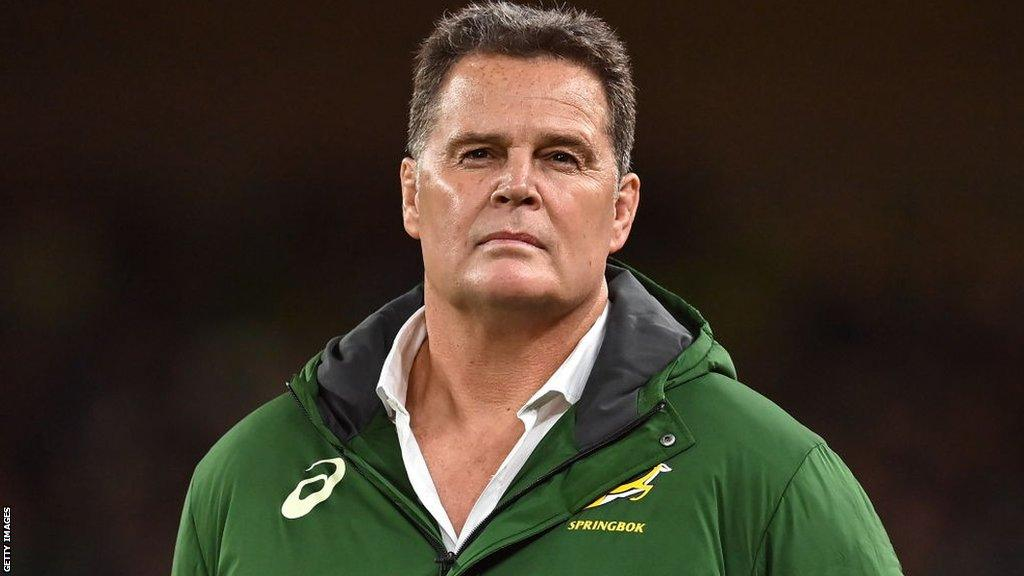
Image: bbc.com/sport/ Getty Img
Since returning to South Africa in 2018, Rassie Erasmus has transformed the Springboks into one of the most dominant forces in world rugby, overseeing a golden era that includes multiple major titles and sustained global success. With the next Rugby World Cup on the horizon, the team is already being tipped to chase a historic third consecutive title.
Erasmus has been involved in 89 Test matches in roles as director of rugby and head coach, winning 64 of them — an impressive success rate of around 72%. Since officially resuming the head coach role in 2024, he has guided South Africa to back-to-back Rugby Championship titles and helped maintain their position at the top of the world rankings, as recognised by World Rugby. This consistency at the highest level has cemented his reputation as one of the leading coaches in the modern game.

His impact has extended beyond results alone. Erasmus is widely credited with building depth in the squad, rotating players effectively, and introducing innovative tactics — including the strategic use of substitutes — that have influenced the global game. Under his leadership, South Africa has combined physical dominance with tactical adaptability, making them difficult opponents for any nation.
Given this success, it came as little surprise when SA Rugby extended Erasmus’s contract through to 2031. The decision was largely welcomed by fans and stakeholders, who see continuity as key to maintaining the Springboks’ competitive edge in the years ahead.
However, not everyone agrees that a long-term extension was the best move. Former Springbok Gio Aplon has raised concerns about what lies beyond the 2027 Rugby World Cup, suggesting that a new generation of players may benefit from a fresh coaching approach. Speaking publicly, Aplon acknowledged Erasmus’s current success but questioned whether committing so far into the future — before the next World Cup cycle has even concluded — could carry risks.

His comments reflect a broader debate in international sport: whether long-term stability outweighs the potential benefits of renewal. Aplon pointed to the possibility of a changing player dynamic, where younger athletes may respond differently to established coaching methods. While he stopped short of predicting problems, he suggested caution when planning so far ahead.
Erasmus, however, has made it clear that his focus remains firmly on the present. He described the contract extension as a straightforward decision and reiterated his commitment to South African rugby, noting that he has little interest in coaching any other national team. For now, his attention is on navigating a demanding international schedule in the lead-up to the next World Cup.
As South Africa prepares for another title push, the debate around long-term leadership is likely to continue in the background. For many supporters, Erasmus’s track record speaks for itself. For others, the question is whether this era of success can seamlessly transition into the next generation of Springbok rugby.
About the Author