Farewell to a Legend: South Africa Mourns the Passing of Nandi Nyembe
 Viable News Team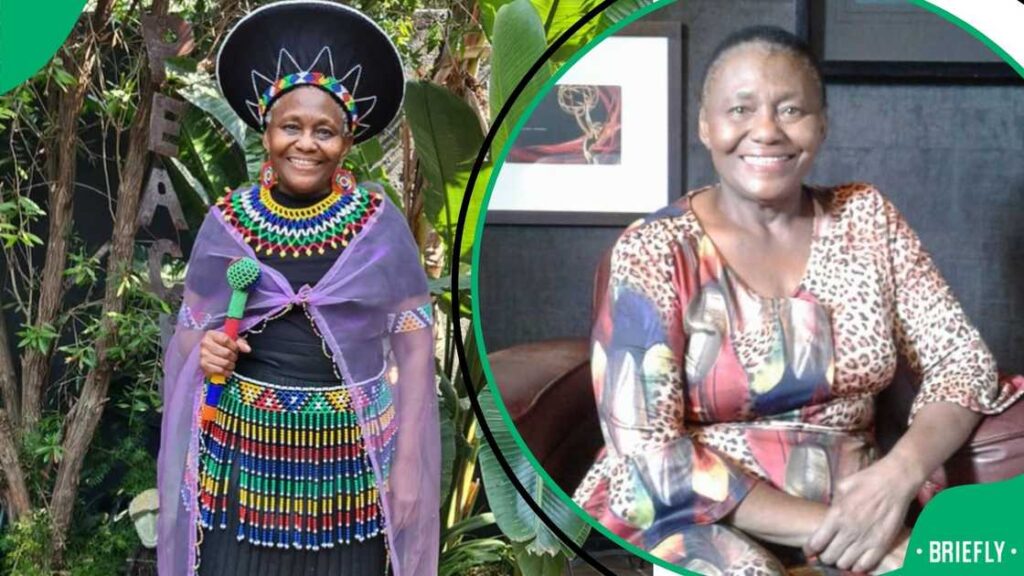
South Africa is mourning the loss of one of its most beloved cultural figures, veteran actress and spiritual healer Nandi Nyembe, who passed away on 23 August 2025 at the age of 75. Just days after celebrating her birthday on 19 August, Nyembe took her final bow at her home in Soshanguve, Pretoria, surrounded by her loved ones. The news was confirmed in a joint statement by her family and the Department of Sport, Arts and Culture, triggering an outpouring of grief from fans, colleagues, and government officials.
Her death marks the end of an era in South African entertainment. For more than four decades, Nyembe graced the stage and screen with her remarkable presence, becoming one of the most recognizable and respected figures in local storytelling. She was not just an actress she was a cultural force, a matriarch of the arts, and a voice for the voiceless. Her performances weren’t just seen; they were deeply felt by the millions who grew up watching her embody the joys, traumas, and triumphs of everyday South Africans.
Born in Kliptown, Johannesburg in 1950, Nandi Nyembe came of age during apartheid and launched her career in the mid-1980s, a time when Black South Africans faced immense barriers to entry in the entertainment industry. Despite the challenges, Nyembe’s talent and resilience saw her rise to national fame. She became a household name through her roles in popular series like Yizo Yizo, where she played the strict but caring Lily; Zone 14, where she portrayed the strong matriarch Nandi Sibiya; and Soul City, where her performance as Sister Lizzie earned her wide acclaim.
Over the years, Nyembe appeared in a wide array of acclaimed productions, including Isibaya, Isithembiso, Ashes to Ashes, Jacob’s Cross, 4Play: Sex Tips for Girls, and House of Zwide. Her versatility allowed her to seamlessly shift between roles from teachers and nurses to sangomas and mothers. Her film work was equally impactful, including her performance in Yesterday, the Oscar-nominated film that tackled HIV/AIDS through the lens of rural South African life. In that film, as in others, she often portrayed sangomas, roles she carried with both spiritual authenticity and dramatic depth due to her own experience as a traditional healer.
Indeed, one of the defining aspects of Nandi Nyembe’s life was her dual identity as both an actress and a practicing sangoma. Initiated into the ancestral calling at the age of 17, after suffering an unexplained illness, she embraced the role of healer not just in her personal life, but also in her professional work. Her portrayal of sangomas on screen reflected a level of dignity, complexity, and humanity that was rare in South African media. Far from being stereotypical or theatrical, her performances helped demystify traditional spirituality and elevate the role of African belief systems in contemporary storytelling.
Her spiritual leadership was not just an act but a way of life. In interviews, Nyembe spoke openly about her journey into traditional healing and how it grounded her both emotionally and artistically. She passed on this wisdom to the next generation, including her own daughter, who also briefly trained as a sangoma. Nyembe’s unique position as both cultural custodian and mainstream performer gave her the ability to bridge worlds—between the ancestral and the modern, the spiritual and the dramatic.
Despite her fame, Nandi Nyembe’s life was not without hardship. In recent years, she faced serious health issues that left her wheelchair-bound, battling chronic pain in her knees and spine. She underwent surgery on one knee and awaited surgery on the other, but her lack of medical aid forced her to rely on public healthcare facilities. In April 2025, Nyembe made a rare public plea for assistance, revealing that her medical bills and personal expenses had left her in financial distress. She had spent R88,000 of her savings to help her ailing son, and was left with more than R30,000 in unpaid hospital bills.
In a video that circulated widely on social media, Nyembe spoke candidly about her situation. “I never wanted to ask for help,” she said, her voice breaking with emotion. “But I am not coping anymore.” Her words sparked a wave of support from fellow artists, fans, and officials. The video also reignited conversations about how South Africa treats its veteran artists those who gave their lives to uplifting the nation’s cultural identity, only to face financial insecurity in old age.
In response, Minister Gayton McKenzie pledged his personal and departmental support, helping to ease Nyembe’s burdens in her final months. Her story became a rallying cry for greater institutional support for senior creatives. Plans were discussed to launch an annual tribute and support fund for aging legends an initiative that Nyembe wholeheartedly endorsed before her passing.
The tributes following her death have been both emotional and far-reaching. In an official statement, the Department of Sport, Arts and Culture praised her as “the soul of South African storytelling,” a woman who “carried our struggles, our laughter, and our victories through every performance.” Fans took to social media in droves to share their favourite scenes, quotes, and memories, with many describing her as a “mother of the nation.” Her grandson, Jabulani Nyembe, said simply, “To the country she was a legend, but to us, she was our everything.”
Even in her final years, Nyembe continued to work and inspire. After her controversial “death” scene in House of Zwide in 2021an episode that sparked real-life rumours of her demise she returned with fresh roles, most notably in Adulting on Showmax. Her presence on screen remained powerful, unshaken by age or ailment. She continued to bring depth, warmth, and authority to every role she played, never losing her gift for making South Africans feel seen and heard.
Her passing comes as a deep blow to an industry already grappling with questions about sustainability and legacy. But if there is one thing Nandi Nyembe’s life teaches us, it is that greatness does not come from fame or fortune—it comes from purpose. From the township streets of Soweto to the polished sets of international productions, from ancestral rituals to scripted dialogue, her life was an ongoing act of service, healing, and expression.
She reminded us that our stories matter. That ordinary lives are worthy of the spotlight. That strength often wears the face of a woman, quiet but unyielding.
In remembering Nandi Nyembe, we do not just honour an actress. We honour a healer, a teacher, a mother, and a trailblazer. Her legacy will live on in every actor she inspired, every child who watched her and felt proud, every person who saw their own lives reflected in hers.
As we lay her to rest, we do so with gratitude. Gratitude for the art, the wisdom, and the grace she gave us freely, fully, and fearlessly. Nandi Nyembe may have exited the stage, but her story will echo through the generations.
About the Author