Debbie Howes: At 62, She’s Defying Gravity and Expectations on the World Stage
 Viable News Team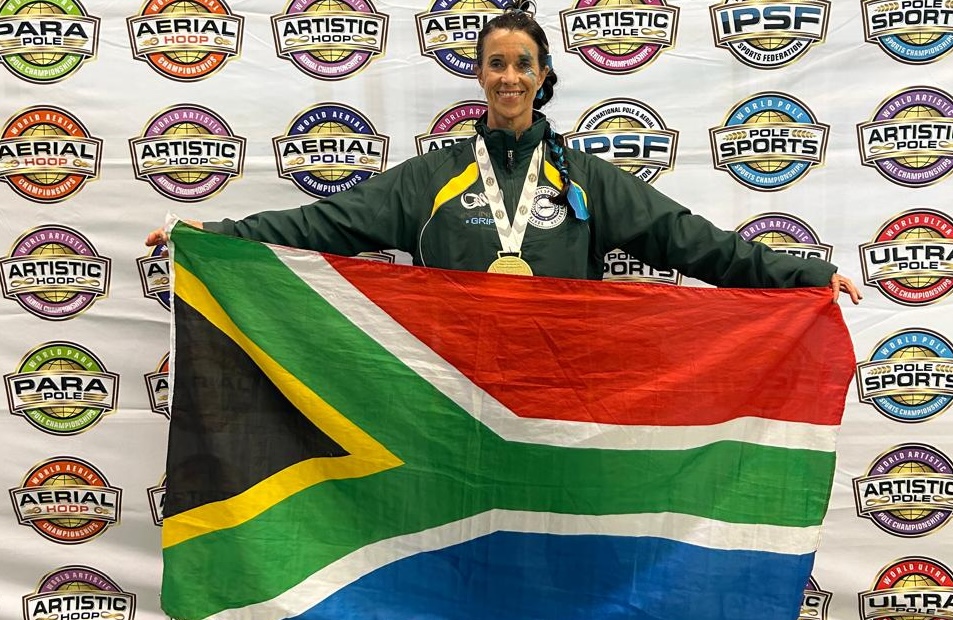
Johannesburg, South Africa (August 2025) – At an age when most people are winding down, Debbie Howes is ramping up. With calloused hands, a determined spirit, and decades of life behind her, the 62-year-old is preparing to fly literally. In October, she’ll take to the stage in Argentina, representing South Africa at the World Pole and Aerial Sports Championships.
For some, pole sport might still carry outdated perceptions. For Debbie, it’s power, precision, and purpose. And for South Africa, it’s a reminder that age is never a barrier to passion, performance, or international pride.
Debbie isn’t new to the global stage she’s already earned a gold medal in Poland and a bronze in Sweden. But this year feels different. She’s pushing harder, reaching further, and chasing a personal best that reflects more than just scores; it represents a lifetime of movement, discipline, and self-discovery.
And to think it all started in her late forties.
Debbie didn’t grow up dreaming of becoming a pole athlete. In fact, she was a cabaret dancer in her younger days, performing in glamorous shows until motherhood redirected her path. For years, she traded the stage for stability. But movement fluid, expressive, challenging never left her system. In her forties, she discovered pole not as a spectacle, but as a sport. What began as a fitness experiment soon became a deep, enduring love.
By day, Debbie is a clinical psychologist. Her work is rooted in compassion helping others carry emotional burdens, navigate trauma, and heal. It’s a vocation that demands deep presence and empathy. But by night, she transforms. In the pole studio, she swaps quiet listening for explosive movement. Her body tells the stories. Her breath, her rhythm, her strength these are her instruments.
“After sitting still the whole day, it’s just such a relief to move,” she says, describing how pole brings her back into herself. “It gives me a lot of stress release and it’s a totally different focus.”
That contrast between mind and body, therapy and athleticism, is part of what fuels her drive. Pole challenges her physically, mentally, emotionally. It doesn’t allow autopilot. It demands presence. It demands courage.
This year, Debbie’s aiming high. She’s entering the Masters 60+ Women’s category, performing both a solo routine and a group piece with three teammates. The routines are complex and unforgiving. Judges scrutinise every detail form, flow, strength, lines, transitions. Mistakes are costly. But the risk is what makes it real.
What makes Debbie’s story so powerful isn’t just that she’s competing at 62. It’s how she’s doing it.
Last year, she was still recovering from a broken heel. She’s competed while sick. She’s trained through setbacks, soreness, and slower recovery times. But she’s adapted. She’s learned how to listen to her body more than ever before. And this year, she’s upped the difficulty in her routines, adding technical bonuses to score higher and stretch her limits.
“I just want to stay healthy this year,” she laughs, fully aware of the fine line between ambition and injury.
Her success is no accident. It’s built on years of movement, a deep connection to her body, and a philosophy of natural, balanced nutrition. It’s also built on a support system that cheers her on every step of the way. Her son, who’s also into pole and aerial sports, gets it. Her 90-something-year-old mother proudly watches from the sidelines. And her community fellow athletes, coaches, clients, and friends rallies behind her mission.
“They understand it’s physically tough and takes discipline, but they’re proud of what I do.”
And what she does is inspiring a generation not just of athletes, but of everyday people who might feel their dreams have an expiration date. Through Debbie, we see what’s possible when passion outweighs fear, and when purpose overrides age.
The pressure of competition is real. But so is her sense of joy. Debbie’s routines are a blend of elegance and grit, performed under high scrutiny. But she welcomes it.
“There’s no hiding in this sport,” she says. “You have to be fully present. Even if you’re nervous, you just remind yourself that each moment is only happening now. That’s what counts.”
For Debbie, pole sport isn’t about proving anything to anyone else. It’s about challenging herself physically, emotionally, and even spiritually. It’s about showing up, being brave, and embracing discomfort for the sake of growth.
She’s not one to preach. But if there’s one message she wants people to take from her journey, it’s simple: Don’t write yourself off. Don’t assume you’re too old, too late, too far gone. Try something new. Step outside your comfort zone. You might find strength, passion, and confidence you didn’t even know you had.
Debbie’s story is proof that life doesn’t stop at 60. In many ways, it’s just beginning.
In October, when she steps onto that world stage, it won’t just be South Africa she’s representing. It’ll be every person who thought they missed their moment. Every person who wondered if it was still worth trying. Every person who needed permission to begin again.
She doesn’t need a medal to make her moment matter. But if she brings home another one, it’ll be just another reminder that you’re never too old to rise, spin, or fly
About the Author