African Water Ministers Spotlight Multi-Billion Dollar Investment Potential at AU-AIP Summit
 Evident Makatwane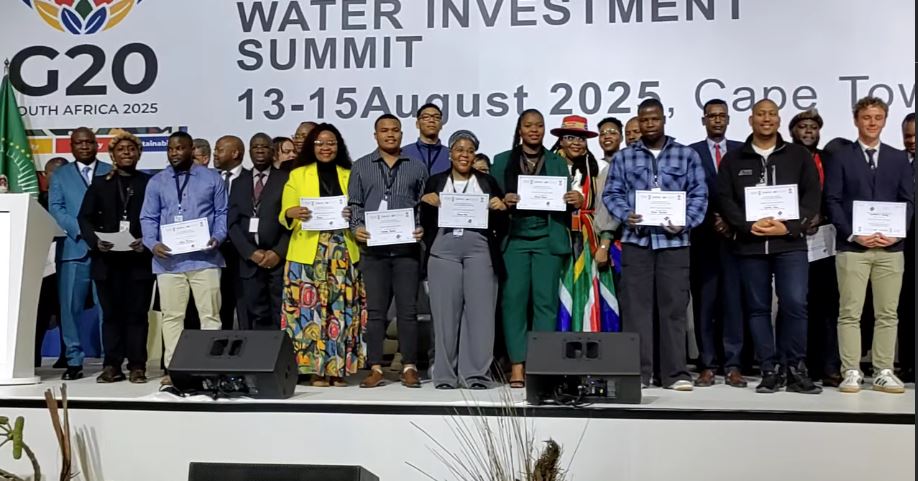
Image Credit: GovernmentZA
At the AU–AIP Water Summit 2025, African water ministers and key leaders showcased the continent’s vast opportunities in the water sector, unveiling transformative bulk projects, climate-resilient financing strategies, and inclusive initiatives ready to attract global investment.
A Summit to Bridge the Water Financing Gap
The African Union–Africa Water Investment Programme (AU-AIP) Summit held from August 13–15 at the Cape Town International Convention Centre came under South Africa’s G20 presidency. It gathered heads of state, investors, policymakers, and development institutions aiming to address Africa’s staggering US$30 billion annual water investment shortfall.
Key objectives included showcasing over 80 investment-ready water and sanitation projects, strengthening governance frameworks, and forging new funding pathways. The summit is set to culminate in a politically endorsed Declaration, pledges worth billions of investment, and the launching of a Global Outlook Council on Water Investments.
Country Spotlights: Projects on Display
Zimbabwe: “A Dam Is an Economy”
Zimbabwe’s Minister Dr Anxious Jongwe Masuka highlighted the country’s investment appeal, citing its 10,600 dams the continent’s highest density. He introduced the “Infrastructure 6.0” model, which combines hydropower, agriculture, potable water, fisheries, tourism, and wastewater management within each dam precinct.
To streamline investment, Zimbabwe has established Special Economic Zones with an integrated one-stop investment centre, pairing the Zimbabwe Investment Development Agency (ZIDA) and the Zimbabwe National Water Authority (ZINWA). Minister Masuka urged, “If you are looking for investment, start in Zimbabwe.”
Malawi: Climate-Resilient WASH Financing
Malawi’s Water Minister Abida Sidik Mia emphasised water’s strategic importance while acknowledging that access remains limited for many Africans. She introduced Malawi’s pioneering Climate Resilient WASH Financing Strategy, aligning with national plans and climate adaptation goals. This strategy has shifted policy from reactive to long-term planning by clarifying financing needs, identifying funding sources, and signaling to investors that Malawi is finance-ready.
Côte d’Ivoire: “Water for All” Initiative
Minister Laurent Chagba of Côte d’Ivoire outlined the ambitious “Water for All” programme, valued at 1,320 billion CFA francs (approx. US$2.3 billion). The project aims to guarantee sustainable drinking water access across rural and urban areas, with major results in Abidjan, expanded water production in 27 regions, 450,000 social water connections planned, and rehabilitation of hand pumps. It also includes an Integrated Adaptation Programme for the Niger River Basin, backed by the African Development Bank, spanning eight regions.
Towards a Unified Water Investment Vision
The summit also spotlighted how countries are pioneering novel investment tools and multi-sector collaboration:
- More than 70 representatives from 15 AU countries attended training workshops in Addis Ababa to develop bankable climate-resilient water investment pipelines, guided by AU and GCF.
- This capacity building is a precursor to presenting viable national projects at the AU-AIP Summit.
About the Author


 Viable News Team