SIU Exposes Widespread Corruption in South Africa’s Immigration System Involving Home Affairs Officials and High-Profile Figures
 Viable News Team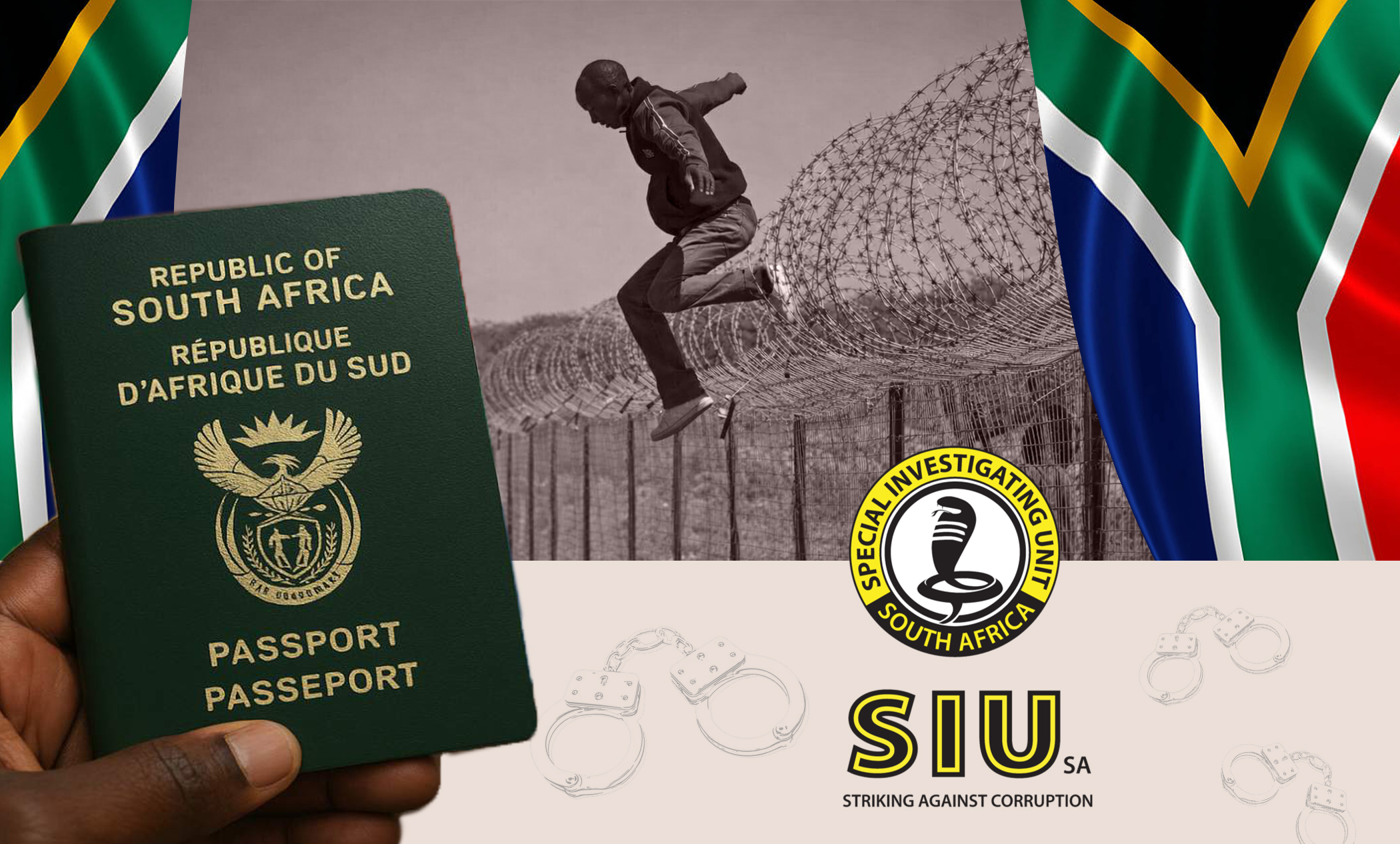
South Africa’s immigration system has been rocked by a major corruption scandal, with the Special Investigating Unit (SIU) revealing that residence permits, visas and asylum-related documents were obtained through fraud and illicit payments over many years. The interim report, released this week, paints a troubling picture of systemic abuse within the Department of Home Affairs, where permits were effectively treated as a profit-making commodity by corrupt officials and external actors.
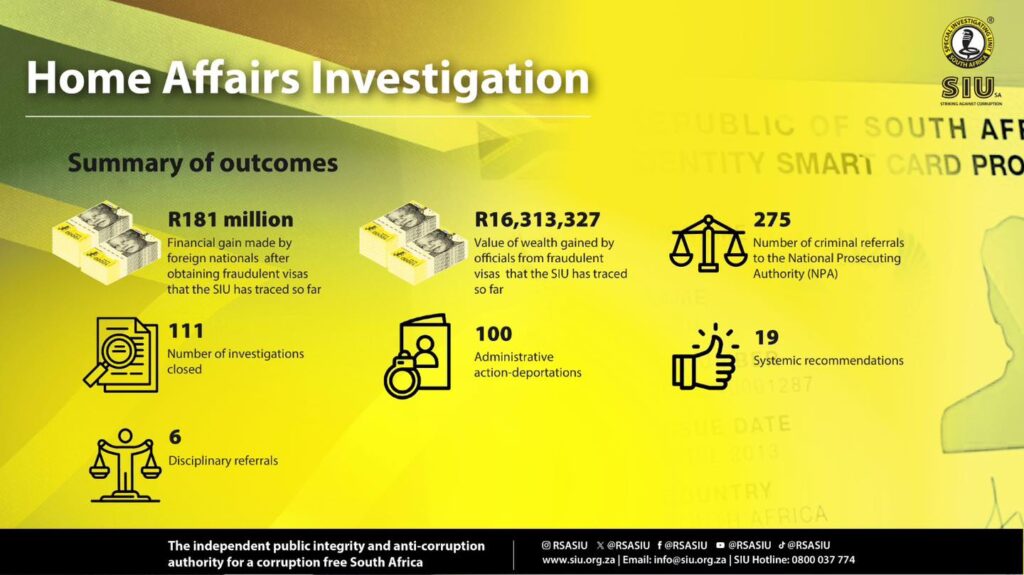
Acting SIU Head Leonard Lekgetho told media that investigators traced more than R181 million in financial gains linked to fraudulent visa applications that were supported by fake documentation and war-ranted no legitimate claim under immigration laws. He said the investigation found that officials entrusted to uphold integrity instead turned their positions into money-making schemes, colluding with external networks to exploit systemic weaknesses for personal gain.
How the Syndicate Operated
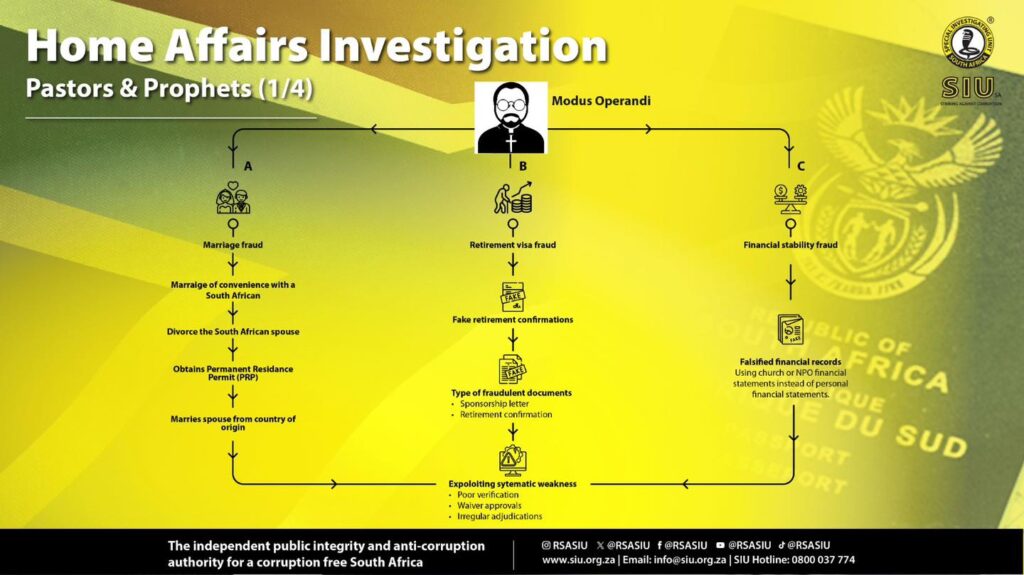
According to the SIU’s findings, visa and permit approvals were fast-tracked with minimal scrutiny, often triggered by WhatsApp communications and payments delivered through e-wallets or disguised transfers, rather than through formal departmental applications. In many cases, payments were cleverly concealed by routing funds through the spouses or associates of officials, masking them as unrelated transactions.
The unit revealed examples of payments ranging from R500 to R3 000 linked directly to quick-approval communications. In one case, a permit approved on 20 December was followed by a R3 000 deposit into a spouse’s account the next day. Such transactions were often referenced with unrelated labels like “building material” or “visa process” to hide their true purpose.

Small Salaries, Massive Gains
The scandal shows how deeply entrenched the corruption was. Lekgetho reported that four Home Affairs officials earning less than R25 000 per month collectively received R16.3 million in direct deposits. In some cases, officials used these illicit funds to buy multiple properties, build luxury homes, and even develop infrastructure projects, all while their official salaries remained modest.
High-Profile Religious Figures Named
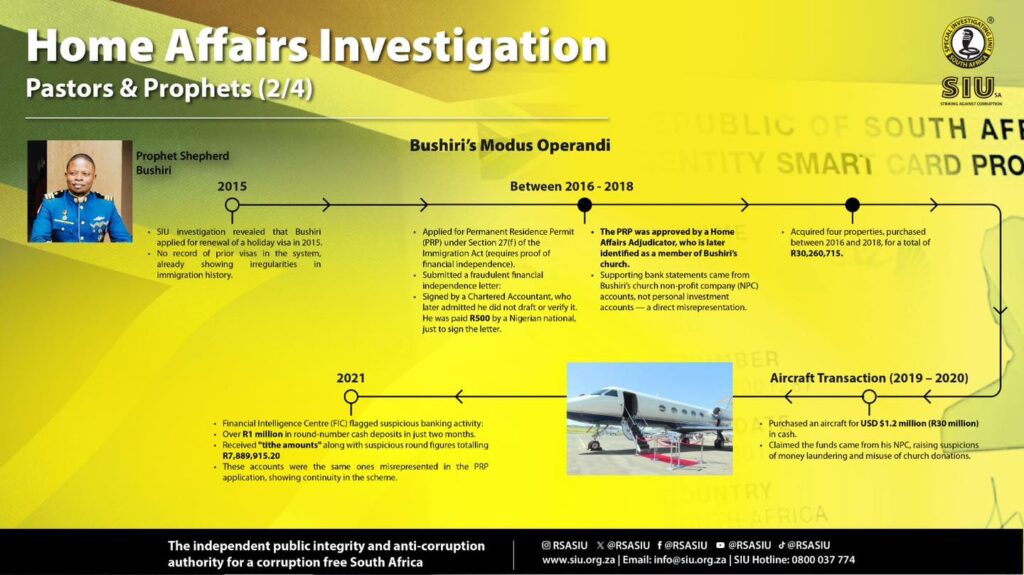
The SIU’s investigation also identified prominent figures including well-known pastors and self-described prophets who allegedly exploited the broken system to secure fraudulent immigration status. Among those mentioned was the controversial Malawian preacher Shepherd Bushiri, whose permanent residence permit was allegedly approved by a Home Affairs adjudicator from his own church, a clear conflict of interest.
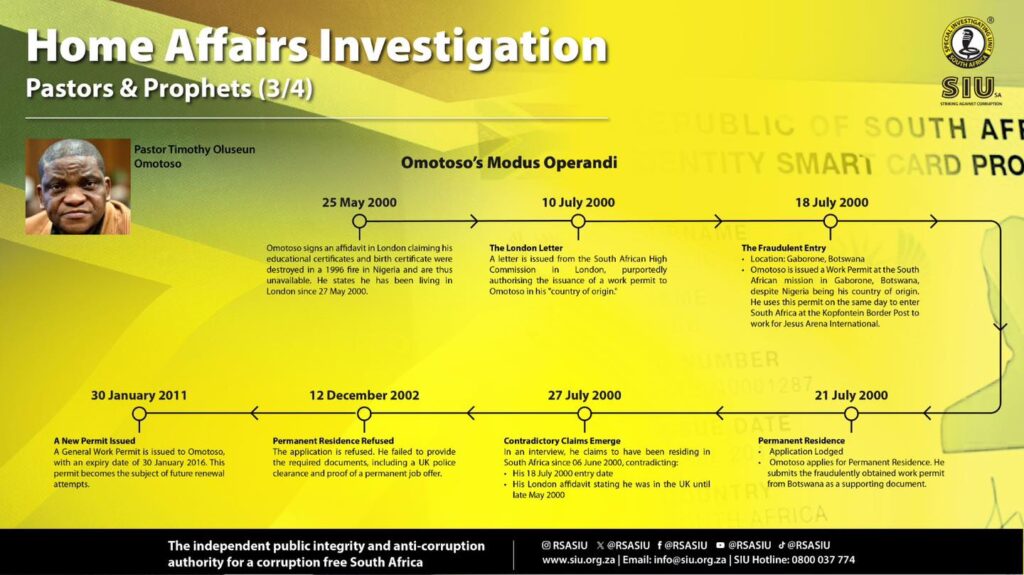
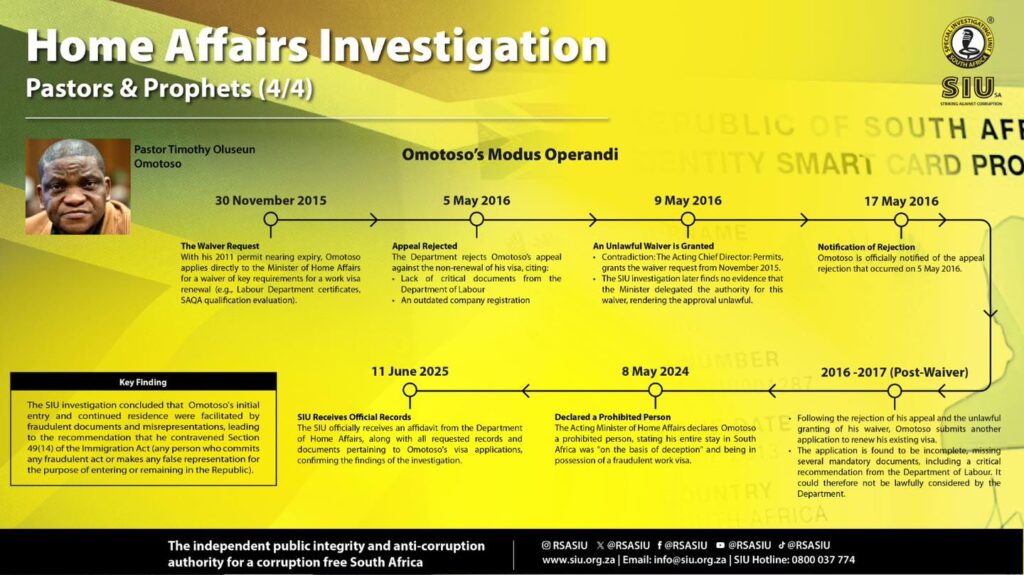
Another figure cited was Nigerian pastor Timothy Omotoso, whose initial entry and subsequent residence were allegedly based on fraudulent work permits and unauthorized waivers granted without proper authority. In each case, fabricated documents and manipulated processes were said to have played a central role.
Systemic Weaknesses and Recommendations
The SIU’s interim report found that systemic issues, including poor verification, lack of biometric checks and inadequate oversight, enabled corruption to flourish for years. It noted that retirement visas and asylum permits categories with historically weak monitoring were especially susceptible to abuse.
To address the crisis, the unit has recommended a series of reforms, including stricter employee vetting, enhanced biometric controls, integrated data systems across government departments, and improved verification processes before any visa or permit is issued. These steps are aimed at restoring integrity to the immigration system and reinforcing public trust.
Government and Public Response
In response to the revelations, the Department of Home Affairs has already begun disciplinary processes and dismissed dozens of officials implicated in the scandal. Additionally, the SIU has made 275 criminal referrals to the National Prosecuting Authority (NPA) in connection with the investigation.
Home Affairs Minister Leon Schreiber has emphasised the government’s commitment to tackling corruption and noted ongoing efforts to digitise immigration systems and close loopholes that have been exploited for years.
About the Author